Stroke Prevention Day is an annual UK awareness event held on the last Thursday in January, with a clear message that high blood pressure is the biggest modifiable risk factor for stroke (Stroke Association, 2026). In 2026 this falls on 29 January. Because hypertension can be symptom-free, checking and managing blood pressure is central to stroke prevention.
Alongside established clinical and lifestyle approaches, there is growing interest in inspiratory muscle training (IMT) to support cardiovascular health. Devices such as POWERbreathe deliver structured IMT and have been used in research exploring blood pressure and vascular function.
Why Blood Pressure Matters for Stroke Prevention
High blood pressure damages blood vessel walls and increases the likelihood of both ischaemic and haemorrhagic stroke. Routine monitoring and management help reduce risk (Stroke Association, 2026). The NHS also emphasises the importance of lifestyle modifications, such as diet, activity, alcohol moderation and smoking cessation, to support blood pressure control (NHS, 2026).
What is Inspiratory Muscle Training and Why It Is Relevant
Inspiratory muscle training strengthens the diaphragm and accessory inspiratory muscles by breathing against resistance. This form of resistance training for the respiratory muscles can improve respiratory efficiency and has been linked to cardiovascular responses.
The connection to stroke prevention centres on blood pressure reduction and vascular health, because lowering hypertension is directly linked to a lower risk of stroke.
What the Research Says: IMT and Blood Pressure in Stroke Prevention
A randomised, sham-controlled trial showed that high-resistance inspiratory muscle strength training significantly reduced systolic blood pressure and improved endothelial function in adults with above-normal blood pressure (Craighead et al., 2021). Improvements in endothelial function are important because endothelial dysfunction is a recognised early step in atherosclerosis and cardiovascular risk.
A systematic review and meta-analysis also reported that IMT may improve several haemodynamic measures in people with hypertension, supporting the idea that IMT has beneficial cardiovascular effects beyond respiratory strength alone (Zheng et al., 2023).
Importantly, while these studies demonstrate positive effects on risk factors, they do not claim that IMT alone prevents stroke. Instead, the evidence suggests that IMT can be an adjunct to established prevention strategies, particularly for improving blood pressure control.
IMT in Stroke Pathways: Evidence from Rehabilitation Research
Although this blog emphasises prevention, it is useful to note that inspiratory muscle weakness and reduced exercise capacity are common after stroke. Research in stroke survivors has demonstrated that IMT can improve respiratory function and functional outcomes when used alongside conventional rehabilitation (Lee et al., 2025). These findings support the practical use of respiratory training across the stroke care continuum, bolstering activity tolerance and physical function, which matter for long-term vascular health.
How POWERbreathe Can Support Your Programme
POWERbreathe devices are designed to deliver structured, progressive IMT and are used in both research and clinical settings. HaB Direct supplies the POWERbreathe range for UK customers, allowing clinicians, therapists and individuals to integrate IMT into prevention or rehabilitation plans.
Common options include the POWERbreathe K-Series, which offers digital training with feedback that can help users adhere to their programmes and track progress.
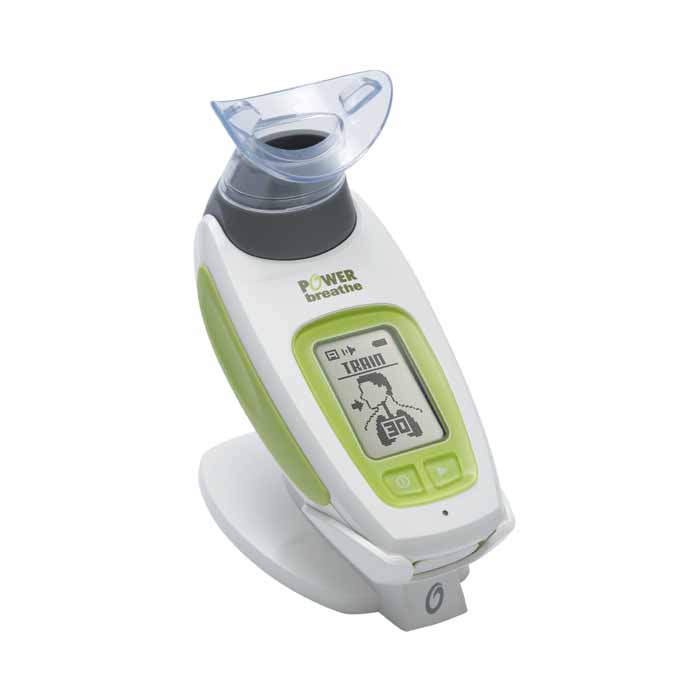
POWERbreathe K1 Electronic Inspiratory Breathing Trainer
The POWERbreathe K1 is the entry-level model in the POWERbreathe K-Series; it uses the same auto-optimising IMT technology as all K-Series models but includes fewer features, options and results.
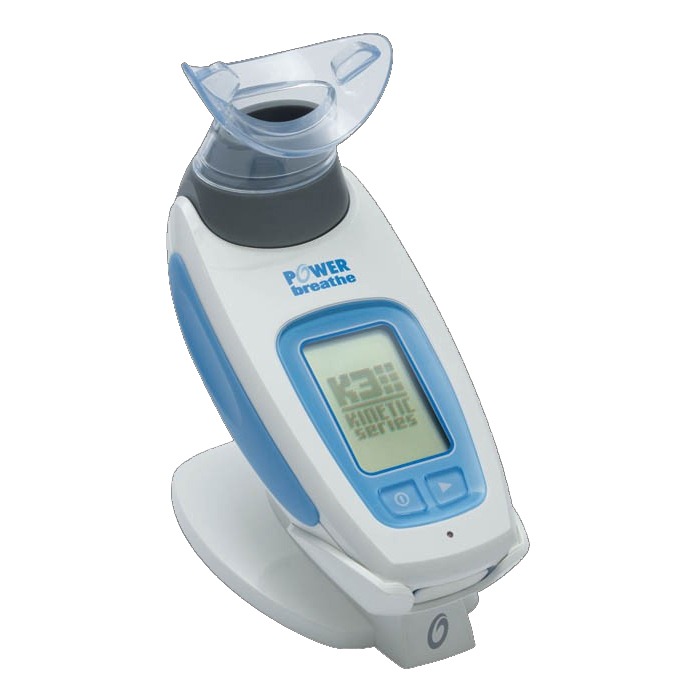
POWERbreathe K3 Electronic Inspiratory Breathing Trainer
The POWERbreathe K3 is part of the 3rd generation POWERbreathe Inspiratory Muscle Training (IMT) K-Series. This advanced model uses the same auto-optimising IMT technology as the K1 and K2…
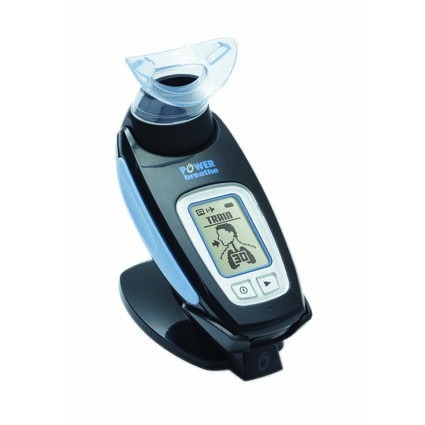
POWERbreathe K4 Electronic Inspiratory Breathing Trainer
The POWERbreathe K4 offers elite breathing training for individuals whose goal it is to be at the top of their game. The Breathe-Link Software lets you take the guesswork out of your training; monitor…
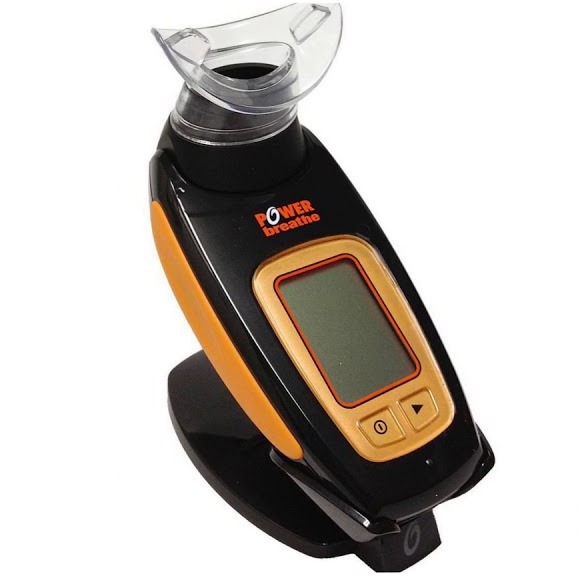
POWERbreathe K5 Electronic Inspiratory Breathing Trainer
The POWERbreathe K5 offers elite training for individuals, personal trainers and group training/coaching environments.
With the K5 Breathe-Link software for PC / Mac, you can maximise breathing performance by monitoring and analysing training and test results, on screen, in pdf and in print.
If your goal is stroke risk reduction through better blood pressure control, the key is consistency and appropriate protocol adherence, ideally with clinical oversight. Devices on their own do not replace standard care, and any IMT programme should be aligned with medical advice for people with hypertension or cardiovascular conditions.
Practical Guidance for Safe Use
If you are considering IMT to support cardiovascular health:
- Seek medical guidance if you have diagnosed hypertension, cardiovascular disease, respiratory disease or a history of stroke.
- Follow a structured and consistent protocol as used in clinical research, often involving daily sessions over several weeks (Craighead et al., 2021).
- Continue to monitor blood pressure and do not alter prescribed medication without clinical approval.
- Consider IMT as an adjunct to established risk-reducing behaviours such as regular activity, balanced nutrition and smoking cessation.
How HaB Direct Can Help
HaB Direct can support clinics, health professionals and researchers in selecting the most suitable POWERbreathe devices and integrating IMT into broader prevention or rehabilitation programmes. Guidance and product support are available for the full POWERbreathe range (HaB Direct, 2026).
References
Craighead, D.H., Sharma, S., Bole, I., Durrant, J.R. and Beck, D.T., 2021. Time-efficient inspiratory muscle strength training lowers blood pressure and improves endothelial function in adults with above-normal systolic blood pressure. Journal of the American Heart Association, 10(15), e020224. Available at: https://pubmed.ncbi.nlm.nih.gov/34184544/
Lee, D.-H., Jeong, D.-Y. and Park, Y.-H., 2025. Effects of inspiratory muscle training on respiratory function, trunk stability and balance in stroke patients: a stratified randomized controlled trial. Journal of Exercise Rehabilitation, 21(3), pp.131-139. Available at: https://pubmed.ncbi.nlm.nih.gov/40613053/
NHS, 2026. High blood pressure (hypertension). NHS UK. Available at: https://www.nhs.uk/conditions/high-blood-pressure-hypertension/
Stroke Association, 2026. Stroke Prevention Day. Stroke Association UK. Available at: https://www.stroke.org.uk/stroke-prevention-day
Zheng, S.Q. et al., 2023. Effects of inspiratory muscle training in patients with hypertension: a systematic review and meta-analysis. Frontiers in Cardiovascular Medicine, 10:1113509. Available at: https://www.frontiersin.org/articles/10.3389/fcvm.2023.1113509/full