
What Is the Respiratory Muscle Metaboreflex?
During high intensity exercise, the respiratory muscles produce metabolites such as hydrogen ions and lactate. These activate group III and IV afferent nerve fibres, which send signals to the central nervous system indicating that the respiratory muscles are under stress.

The body responds by increasing sympathetic nervous system activity, which causes vasoconstriction in the blood vessels supplying the limbs. Blood flow is redirected away from the working muscles in the arms and legs to ensure the respiratory muscles receive enough oxygen to maintain ventilation (Harms et al., 1997; Sheel et al., 2001).
This process supports breathing but reduces the oxygen supply to the locomotor muscles. As a result, the limbs fatigue earlier and endurance is reduced. In other words, when the breathing muscles tire, they compete for blood flow with the muscles responsible for movement. This can limit performance even if the legs or arms themselves are still capable of more work.
New Research from 2018 to 2025
Recent studies have strengthened the evidence that inspiratory muscle training (IMT) can reduce the activation of the respiratory muscle metaboreflex. Chan et al. (2023) trained participants at 50% of maximal inspiratory pressure for five weeks, performing two sets of 30 loaded breaths five times per week. Their results showed increased inspiratory strength and a reduced cardiovascular response to inspiratory loading, indicating that the metaboreflex had been attenuated (Chan et al., 2023).
Other work has shown that these adaptations can persist for several weeks even after detraining. A study published in The Journal of Physiology also confirmed that IMT reduces the heart rate and blood pressure response to inspiratory loading, demonstrating a clear reduction in metaboreflex activation (Wiley Online Library).
A 2024 review titled Practical Application of Respiratory Muscle Training in Endurance Sports highlighted that standard sport training does not usually provide enough stimulus to strengthen the inspiratory muscles. This is why RMT can be an effective supplementary tool. The review reported reductions in respiratory muscle fatigue, lower perceived exertion and improvements in endurance across a range of sports (LWW, 2024).
In a 2025 meta-analysis, RMT was shown to produce significant improvements in maximal inspiratory pressure, endurance capacity and overall performance outcomes in athletes (Powerbreathe, 2025).
Swimmers have also been studied in detail. A meta-analysis reported improvements in inspiratory muscle strength by an average of 29.35 cmH₂O following RMT, although changes in lung volumes such as FEV₁ and FVC were more variable (PMC, 2024).
There is also growing evidence that the metaboreflex is relevant in real sporting situations. For example, a study in Translational Medicine showed that inducing respiratory muscle fatigue in young athletes reduced muscle oxygenation and limb performance, such as jump height, confirming that the reflex plays a role during sport-specific efforts (BMC Translational Medicine, 2024).
How POWERbreathe and RMT Can Help Suppress Respiratory Metaboreflex
Respiratory muscle training, using devices such as POWERbreathe, provides athletes with a structured way to strengthen their inspiratory muscles. The resistance can be progressively increased as the muscles adapt. This leads to higher inspiratory strength and endurance, which means the respiratory muscles produce fewer metabolites at a given workload.
As a result, the threshold for triggering the respiratory metaboreflex is raised. Athletes can sustain higher levels of ventilation before the reflex activates. This allows more blood and oxygen to remain available for the working muscles of the arms and legs, delaying fatigue.
RMT can also help increase muscle strength and trunk stability, therefore increasing the capacity to generate and control intrathoracic pressures used for bracing during lifts. A 2024 paper on the effects of inspiratory muscle training (IMT) in older adults showed that IMT improves inspiratory muscle strength and alters thoracoabdominal behaviour (how your chest (thorax) and abdomen move and coordinate) during breathing. Additionally, a stronger, better-coordinated diaphragm can generate negative pressure more effectively during inhalation and support trunk stability during bracing. (Manifield et al.., 2024)
Research also shows that RMT reduces the sensation of breathlessness during intense exercise and speeds up recovery between efforts. These changes can translate into improved performance across a wide range of sports (Powerbreathe, 2024).
Practical Advice for Athletes and Coaches
- Baseline testing: Measure inspiratory strength using MIP, PImax or functional indices such as the S-Index. This helps track progress and adjust load appropriately.
- Training intensity: Many protocols start at around 40 to 60 percent of maximal inspiratory pressure. Chan et al. used 50 percent as an effective stimulus.
- Frequency and duration: Most successful interventions use 5 to 7 sessions per week for 4 to 8 weeks. Some benefits persist after detraining, but regular training is needed to maintain adaptations.
- Mode of training: Threshold or resistive loading can be used depending on the sport. Some studies recommend interval or variable loading to mimic real sport demands.
- Integration with training: Schedule RMT in lower fatigue periods and avoid combining it with maximal strength sessions for the same muscle groups on the same day.
- Monitoring and progression: Reassess every few weeks and increase resistance as strength improves.
- Individual response: Not all athletes respond in the same way. Effects on VO₂max and lung volumes can vary depending on sport, population and protocol.

Modes of Training
Respiratory muscle can be applied in different ways depending on the sport, the demands of competitions, and the athlete’s goals. Understanding these modes helps athletes and coaches select the appropriate approach for their training programme.
- Threshold Training
Threshold training involves breathing against a constant, adjustable resistance. The user inhales against a fixed resistance, set at 40 to 60 percent of their maximal inspiratory pressure for two sets of 30 breaths. The valve only opens when the athlete generates enough inspiratory pressure, ensuring consistent loading on each breath, and allowing for a sustained high ventilation.
This can be done using POWERbreathe Classic, Plus, or K-Series devices. On the Classic and Plus models, resistance is set manually using the dial. On K-Series models, the device measures inspiratory strength and applies precise resistance electronically. This method is best for endurance athletes such as runners, cyclists, rowers and triathletes.
- Interval Inspiratory Muscle Training
Interval IMT alternates between periods of higher and lower resistance or rest, mirroring the fluctuating breathing demands of team and intermittent sports such as football, hockey, rugby and basketball.
On Classic or Plus models, resistance can be adjusted manually between intervals. Athletes often set two resistance levels, for example 60 percent and 30 percent, and alternate between them in timed sets.
K-Series models allow for more structured interval programming. The resistance can be pre-set to change automatically, and sessions can be monitored and stored, making them ideal for high performance environments or teams using periodised respiratory training.
- Variable Loading
Variable loading means changing the breathing resistance progressively in a single session as, during real sports sessions, your breathing effort is not constant.
The K-Series devices are suitable for this method. The K-Series allows for pre-programmed resistance models where the load automatically changes and the resistance reduces through the breath.
This method is ideal for swimming and combat sports where breathing patterns and intensity can vary.
- Flow-Resistive Training
Although POWERbreathe devices are primarily threshold-based, flow-resistive effects can be created by changing the way the athlete breathes. By inhaling faster and more forcefully at a given resistance, the athlete increases the effective load.
This technique is useful for swimmers, free divers and athletes in sports where breath control is critical. Both Classic/Plus and K-Series devices can be used for this method. K-Series models provide live feedback on inspiratory flow, making them particularly valuable for refining breathing technique.
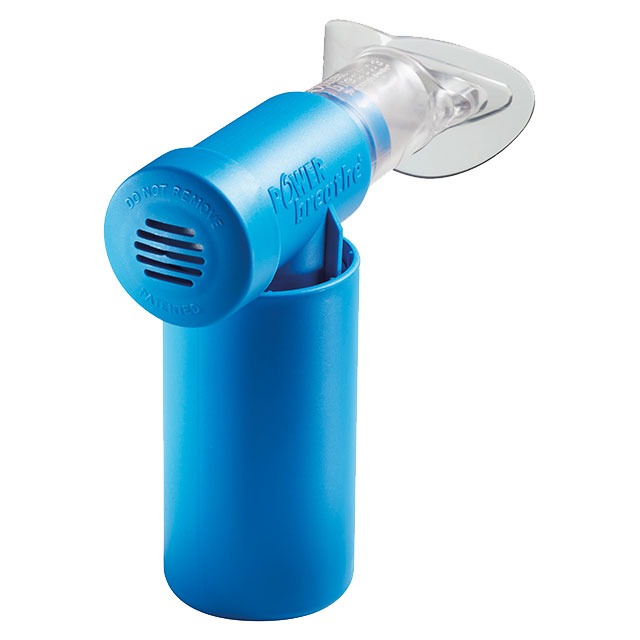
POWERbreathe Classic IMT
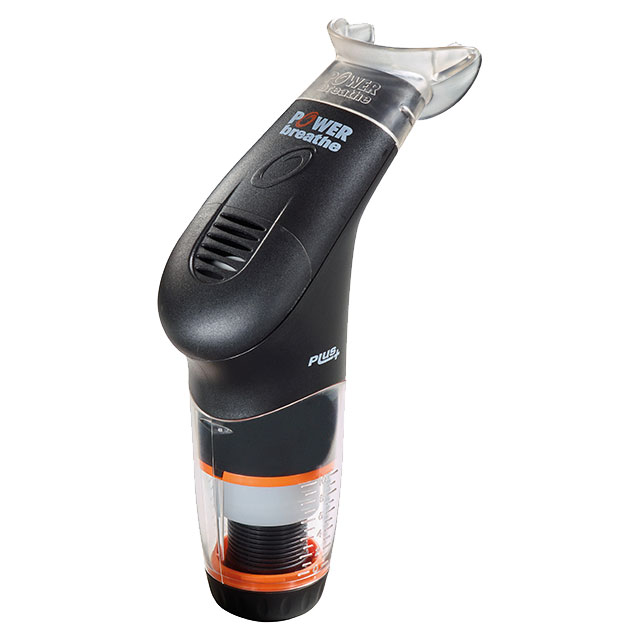
POWERbreathe Plus IMT
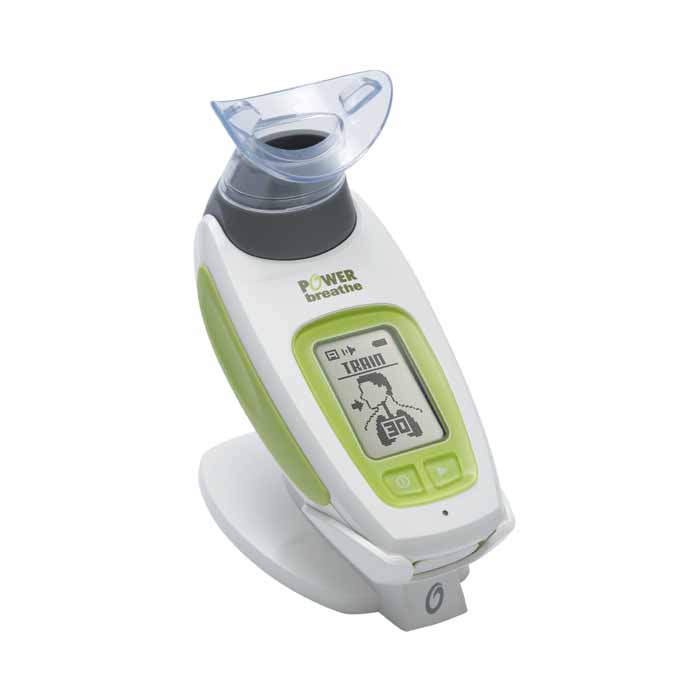
POWERbreathe K1 Electronic Inspiratory Breathing Trainer
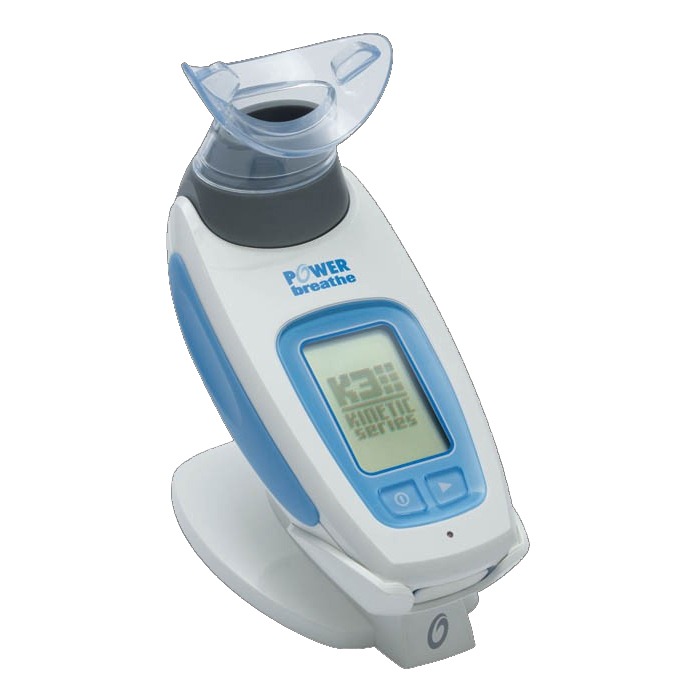
POWERbreathe K3 Electronic Inspiratory Breathing Trainer
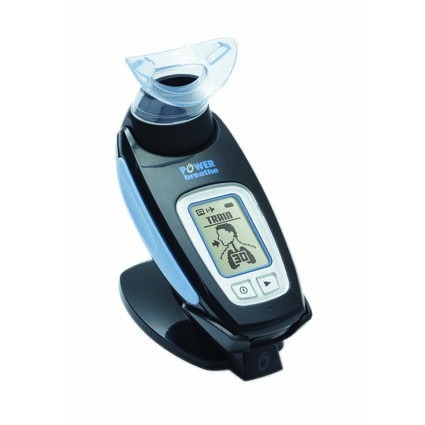
POWERbreathe K4 Electronic Inspiratory Breathing Trainer
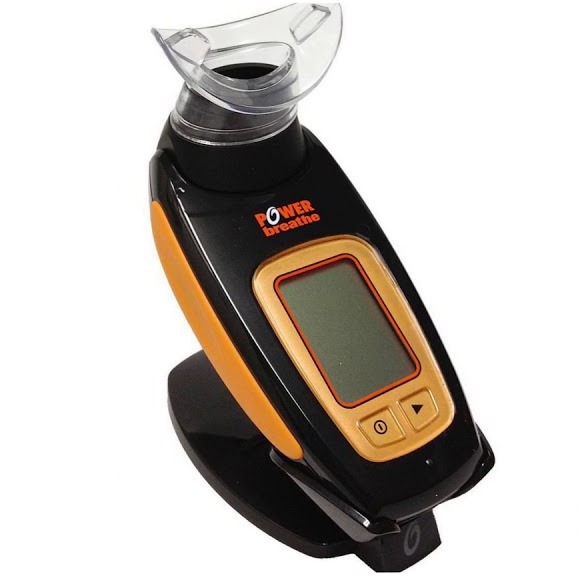
POWERbreathe K5 Electronic Inspiratory Breathing Trainer
Conclusion
The respiratory metaboreflex is an important but often overlooked limiter of athletic performance. It can cause earlier fatigue in the limbs by redirecting blood flow to the respiratory muscles when they are under stress.
Research from the past seven years provides strong evidence that inspiratory muscle training can strengthen the respiratory muscles, delay the onset of the metaboreflex, reduce perceived breathlessness and improve endurance.
POWERbreathe offers a practical, research-supported way to apply these principles in training. By incorporating RMT into a structured programme, athletes can reduce one of the hidden limitations in their performance and gain a competitive edge.
Exclusive POWERbreathe Offer
As the official UK distributor, HaB Direct is offering a special promotion on POWERbreathe devices. This is a great opportunity for athletes, coaches and sports professionals to integrate evidence-based respiratory muscle training into their programmes.You can view the full details of this limited offer here: Exclusive POWERbreathe Special Offer.


