Accurate height measurement underpins assessment in healthcare, sports science, occupational health and research. Height is used to calculate body mass index, track growth and ageing, monitor rehabilitation progress and standardise physiological testing. A stadiometer is the reference tool for this task because it provides repeatable, standardised measurements when used correctly.
At HaB Direct, we supply professional stadiometers from seca, including the seca 213, seca 216 and seca 217. This guide explains what a stadiometer is, how to use one correctly, how to read the measurement and how accurate these devices are in practice.
What is a stadiometer?
A stadiometer is a precision instrument made to measure standing height. It consists of a vertical measuring scale and a horizontal headpiece that rests on the crown of the head. Unlike wall markings or tape measures, a stadiometer uses a fixed reference point and controlled positioning to minimise measurement error.
Stadiometers are widely used in GP surgeries, hospitals, universities, sports performance centres and research laboratories. Portable models are also common in field testing and community health settings.

How to measure height using a stadiometer
To obtain a reliable height measurement, follow a consistent protocol.
First, position the stadiometer on a flat, stable surface. If it is a wall mounted model, ensure it is fixed vertically according to the manufacturer’s instructions.
Ask the individual to remove shoes, bulky clothing and hair accessories. They should stand with heels together, legs straight, arms relaxed at the sides and shoulders level.
The back of the head, shoulder blades, buttocks and heels should be as close to the vertical surface as comfortably possible. The head should be positioned in the Frankfort horizontal plane, meaning the line from the lower margin of the eye socket to the top of the ear opening is horizontal.

Lower the headpiece gently until it makes firm contact with the crown of the head. Ask the individual to stand tall without lifting the heels or arching the back.
Take the reading at eye level and record the height immediately.
How to read a stadiometer
Most professional stadiometers display height in centimetres and millimetres, with some also showing feet and inches.
Read the measurement at the point where the lower edge of the headpiece meets the scale. Avoid reading from an angle, as parallax error can affect accuracy.
For clinical and research use, height is typically recorded to the nearest millimetre or 0.1 cm. Always use the same unit and rounding method for repeat measurements.
Are stadiometers accurate?
When correctly installed and used, stadiometers are highly accurate. Medical grade stadiometers typically have a measurement accuracy of around ±1 mm.
Accuracy depends on several factors. These include correct setup, proper posture of the individual, consistent technique by the operator and regular equipment checks. Portable stadiometers can be just as accurate as fixed models when assembled and positioned correctly.
Research and public health guidance consistently recommend stadiometers over self reported height or improvised methods, which are known to introduce systematic error.
The seca stadiometers available from HaB Direct
Before choosing a stadiometer, it is important to consider how and where it will be used. seca offers a range of professional stadiometers designed to suit both fixed clinical environments and mobile measurement settings. All seca stadiometers are built to medical grade standards, providing clear, easy to read measuring scales and robust construction to support accurate and repeatable height assessment. Whether the requirement is a permanently installed solution or a portable option for field work, the seca range provides reliable tools for consistent height measurement.
| Model | Type | Portability | Key Features | Best suited for |
| seca 213 | Portable stadiometer | High | Lightweight design, quick to assemble and easy to transport. | Schools, sports testing, community health programmes and field research where mobility and rapid setup are important. |
| seca 216 | Wall mounted stadiometer | None | Robust fixed installation, excellent stability and long term reliability. | Clinics, GP practices and laboratories with high throughput and permanent measurement spaces. |
| seca 217 | Portable telescopic stadiometer | Medium to high | Combines portability with strong, durable construction and precise measurement. Can be combined with a flat scale. | Professional environments that require frequent relocation without compromising measurement accuracy. |
All three models are designed to meet international standards for medical measurement and are widely used across healthcare and research settings.
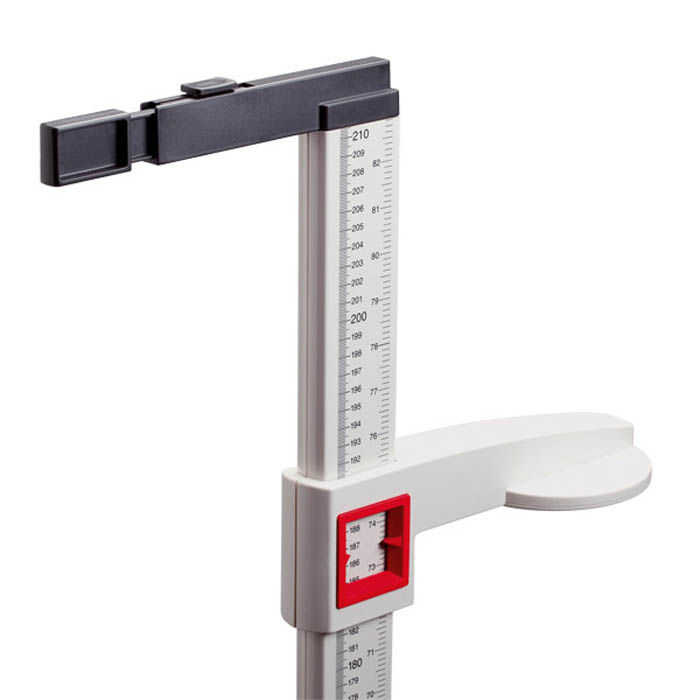
Seca 213 Stadiometer
At only 2.4 kg, the Seca 213 mobile stadiometer is especially suitable for use in the field but also ideal for doctors‘ practices and pediatric hospitals. The…

seca 216 Stadiometer
Mechanical wall mounted stadiometer with locking headpiece for measuring adults and children.

seca 217 Portable Stadiometer
Free-Standing stadiometer with robust platform and heel positioner for optimal three-point height measurement.
Best practice tips for consistent results
Measure height at the same time of day where possible, as spinal compression can reduce height slightly later in the day.
- Use the same stadiometer and operator for repeat measurements in longitudinal studies.
- Check the stadiometer periodically for damage, loose components or incorrect alignment.
- Record measurements immediately and avoid estimating or rounding inconsistently.
Why choose seca?
seca is known globally for its commitment to precision, reliability and long term quality in medical measurement. For over 175 years, seca has specialised in the development of professional measuring and weighing equipment used across healthcare, research and performance environments worldwide.
The seca stadiometers are engineered to deliver consistent, repeatable results. Their measuring scales are clearly marked, their headpieces are designed to sit squarely on the crown of the head, and their constructions are optimised to minimise movement and measurement error. This attention to detail supports accurate height assessment in both routine clinical work and high level research.
Durability is another key advantage. seca devices are designed for frequent use in demanding environments such as GP practices, hospitals and universities. Whether wall mounted or portable, each stadiometer is built to maintain accuracy over time with minimal maintenance.
seca also places strong emphasis on usability. Clear assembly instructions, intuitive operation and practical designs make their stadiometers suitable for a wide range of users, from experienced clinicians to students and field researchers.
For organisations that value accuracy, consistency and trusted medical grade equipment, seca stadiometers offer a proven and dependable solution.
Summary
A stadiometer is the gold standard tool for measuring height accurately and consistently. When used correctly, it provides reliable data that supports clinical decision making, research quality and performance assessment. The seca 213, 216 and 217 stadiometers supplied by HaB Direct offer dependable solutions for both fixed and mobile measurement environments.
If you would like advice on selecting the most suitable stadiometer for your setting, the HaB Direct team is happy to help. Contact us today for advice.
References and further reading
World Health Organization. Physical status: the use and interpretation of anthropometry.
https://apps.who.int/iris/handle/10665/37003
NHS England. Body mass index and height measurement guidance.
https://www.nhs.uk/health-assessment-tools/calculate-your-body-mass-index
seca. Measuring height correctly with a stadiometer.
https://www.seca.com/en_gb/company/knowledge/measuring-height-correctly.html
Centers for Disease Control and Prevention. National Health and Nutrition Examination Survey anthropometry procedures manual.
https://www.cdc.gov/nchs/data/nhanes/nhanes_11_12/Anthropometry_Procedures_Manual.pdf