
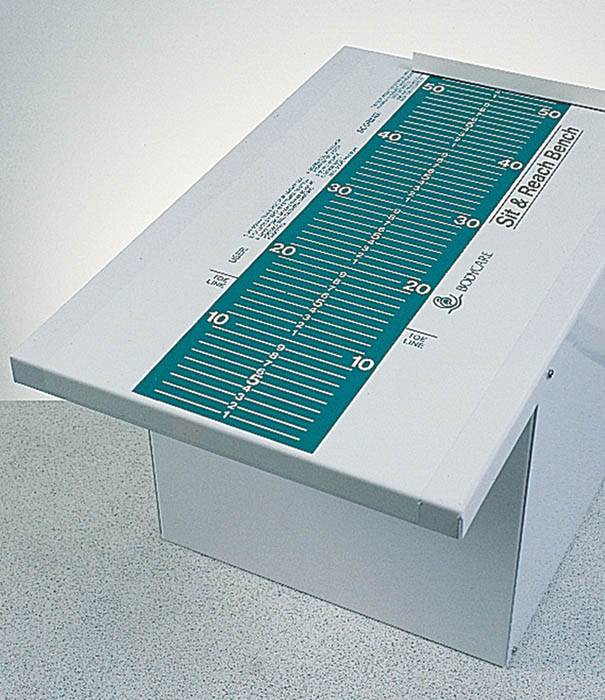

Sit and Reach Box
The Sit and Reach bench or box is used for the box Sit and Reach Test, which measures the flexibility of the lower back and hamstring muscles. In order to test for flexibility, athletes place their feet against the sit and reach box. Athletes then reach forward as far as possible keeping their knees touching the floor.
Regularly testing your flexibility with the sit and reach box will enhance movement efficiency and amplitude, contributing to improved performance. Perfect for use in gyms, schools, clinics, and rehabilitation centres. This simple yet effective device is a key piece of equipment for fitness assessments.
Benefits of a box sit and reach test
Using the sit and reach box is the best way to measure your flexibility in your hamstrings and lower back. Some of the benefits associated with the sit and reach bench include:
Injury prevention
One of the most common causes of lower back pain includes inflexibility in the lower back and hamstrings. Regularly testing your flexibility in these areas with the sit and reach box will help minimise lower back pain, allowing you to work on targeted stretching, improving your flexibility in these areas.
Also, athletes will be able to prevent injuries by regularly stretching and testing their flexibility, as stretching enables joints to handle high-impact sports better.
Tracking progress and setting goals
Using the sit and reach box will allow you to establish a baseline with which to work against when measuring improvement in flexibility. Now, when you go to retest your flexibility every 4-6 weeks, you’ll be able to keep track of any progress made.
You’ll also be able to compare the level of flexibility to established norms, allowing you to establish whether or not the flexibility is excellent, average, or if it needs to be worked on.
Improving posture and movement
Using the sit and reach box can also improve one’s posture. Having tight hamstrings can pull downwards on the pelvis, resulting in poor postural alignment. By tracking flexibility, you’ll be able to keep on top of bad posture and ensure comfort.
Uses:
- Measure Progress: Regular use helps track improvements in flexibility, aiding in the development of tailored exercise programmes to enhance mobility and reduce injury risk.
- Used by Professionals: Widely trusted by physiotherapists, fitness trainers, and sports coaches for flexibility assessments in performance and rehabilitation contexts.
- Simple to Use: Clear instructions and minimal setup make it easy for users to perform tests on their own or in a supervised environment.
Find more fitness testing equipment here.


Reviews
There are no reviews yet.