
Creating an advanced respiratory function lab is essential for modern clinical diagnostics, sports science research, rehabilitation, and performance optimisation. Whether within an NHS hospital, university research facility, or elite sports performance centre, the ability to accurately assess respiratory function is fundamental to understanding human physiology.
An advanced respiratory function lab integrates pulmonary diagnostics, cardiopulmonary exercise testing (CPET), respiratory muscle assessment, and real-world monitoring to deliver a complete picture of respiratory health and performance.
With over 30 years of experience supporting UK institutions, HaB Direct provides the expertise and equipment required to design and implement fully integrated respiratory laboratories.

Why Build an Advanced Respiratory Function Lab?
An advanced respiratory function lab enables detailed analysis of how the respiratory, cardiovascular, and metabolic systems interact under both resting and exercise conditions. This integrated approach is essential because human performance and health are determined by the efficiency of oxygen transport and utilisation across multiple physiological systems.
Cardiorespiratory fitness, most commonly assessed via maximal oxygen uptake (VO₂ max), is widely recognised as one of the strongest predictors of health outcomes and longevity. Large-scale epidemiological research has demonstrated a strong inverse relationship between cardiorespiratory fitness and both cardiovascular disease and all-cause mortality (Blair et al., 2009).
In a landmark study analysing over 120,000 patients, higher levels of cardiorespiratory fitness were associated with significantly lower mortality risk across all populations (Mandsager et al., 2018). Further research shows that even modest improvements in VO₂ max are associated with meaningful reductions in mortality risk and improved long-term health outcomes (Ross et al., 2016).
From a physiological standpoint, VO₂ max reflects the combined efficiency of:
- The pulmonary system to oxygenate blood
- The cardiovascular system to deliver oxygen
- The muscular system to utilise oxygen for energy production
As such, it is widely regarded as the gold standard measure of aerobic fitness and functional capacity (Poole and Jones, 2017).
Why This Matters in Practice
The ability to assess these systems within an advanced respiratory function lab has direct real-world implications.
In clinical settings, advanced respiratory testing enables:
- Early detection of cardiopulmonary limitations not evident at rest
- Differentiation between cardiac, pulmonary, and metabolic causes of exercise intolerance
- Objective risk stratification prior to surgery or treatment
- Personalised rehabilitation programmes
Cardiopulmonary exercise testing (CPET) is widely recognised as a powerful diagnostic tool for evaluating unexplained breathlessness and exercise intolerance (American Thoracic Society and American College of Chest Physicians, 2003).
In performance environments, the same data is used to:
- Identify physiological performance limitations
- Determine ventilatory thresholds
- Optimise training and recovery strategies
- Monitor adaptation over time
Core Pulmonary Function Testing
PowerCube Body+ Whole Body Plethysmography
The PowerCube Body+ represents the gold standard for pulmonary diagnostics and forms the foundation of any advanced respiratory function lab.
Unlike spirometry alone, whole body plethysmography provides a comprehensive assessment of lung mechanics by measuring absolute lung volumes and airway resistance. This is essential for accurately distinguishing between obstructive and restrictive respiratory conditions, particularly in complex clinical cases (Wanger et al., 2005).
Key Clinical Measurements
The system enables detailed analysis of:
- Total Lung Capacity (TLC) – critical for identifying restrictive lung disease
- Residual Volume (RV) – useful in detecting air trapping in obstructive conditions
- Airway Resistance (Raw) – a sensitive indicator of airway obstruction
- Specific Conductance (sGaw) – providing insight into airway calibre independent of lung volume
- Diffusing Capacity (DLCO) – assessing the efficiency of gas exchange across the alveolar membrane
Clinical and Research Applications
In practice, the PowerCube Body+ is widely used in:
- NHS pulmonary function laboratories
- Specialist respiratory clinics
- Pre-operative assessment units
- Academic research investigating lung disease and physiology
Its ability to deliver highly reproducible and standardised measurements ensures it meets international testing guidelines and supports longitudinal patient monitoring.
For organisations building an advanced respiratory function lab, this system provides the diagnostic depth required for both routine clinical use and advanced research.
These parameters are critical for diagnosing complex pulmonary conditions and assessing gas exchange efficiency.
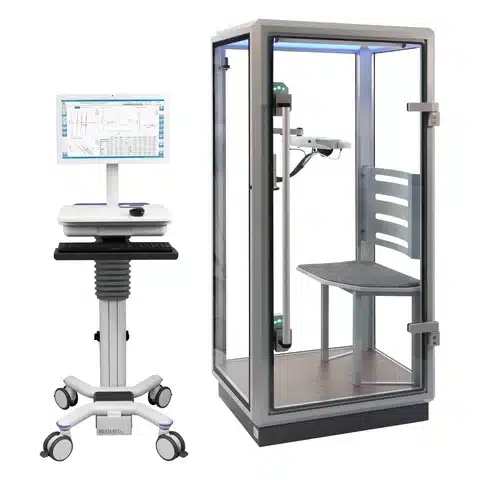
Ganshorn PowerCube Body+
The Ganshorn Powercube Body+ is a sophisticated medical device for comprehensive lung function testing, utilising body plethysmography to measure lung volumes and airway resistance, and spirometry to assess parameters like vital capacity and forced expiratory volume.
Ganshorn SpiroScout Portable Spirometry
The SpiroScout delivers laboratory-grade spirometry in a compact and portable format, making it a versatile component of any advanced respiratory function lab.
Spirometry is the cornerstone of respiratory assessment and is recommended as the first-line diagnostic tool for identifying airflow limitations in conditions such as COPD and asthma (GOLD, 2023).
Advanced Features
The SpiroScout provides:
- High-resolution flow and volume sensing for accurate FVC and FEV1 measurement
- Real-time visual feedback to ensure correct test execution
- Integration with reporting software for standardised data analysis
- Minimal calibration requirements for efficient clinical workflows
Practical Applications
Its portability allows respiratory testing to be conducted in:
- Community screening programmes
- GP surgeries and outpatient clinics
- Bedside hospital assessments
- Sports science and field-based environments
This flexibility ensures that an advanced respiratory function lab can extend beyond fixed facilities and support decentralised testing models.
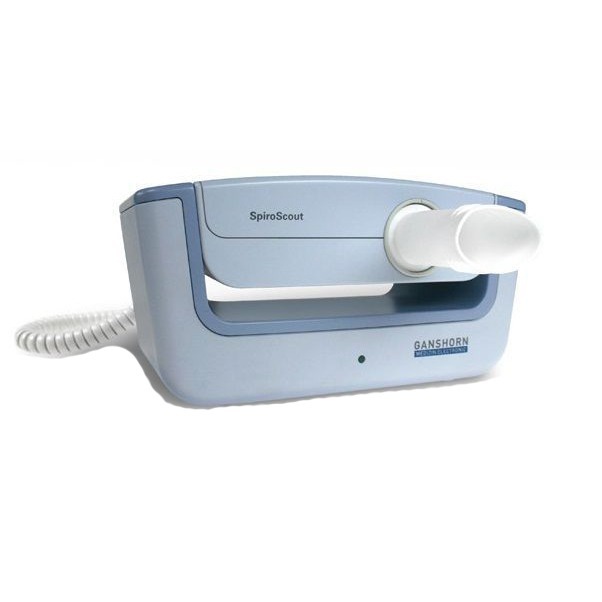
Ganshorn SpiroScout
The Ganshorn SpiroScout offers high-precision pulmonary function testing.
Ganshorn’s unique SprioScout delivers strong performance, low consumption and easy handling, saving you time.
Cardiopulmonary Exercise Testing (CPET)
PowerCube Ergo Metabolic Testing System
The PowerCube Ergo is a central component of any advanced respiratory function lab, enabling comprehensive evaluation of physiological performance under exercise conditions.
CPET is widely recognised as the gold standard for assessing integrated cardiopulmonary function and identifying the root causes of exercise intolerance (ATS/ACCP, 2003).
Advanced Physiological Insights
The system provides detailed analysis of:
- VO₂ max – the definitive measure of aerobic capacity
- Ventilatory thresholds (VT1 and VT2) – key markers for exercise prescription
- VE/VCO₂ slope – an important indicator of ventilatory efficiency and prognosis
- Oxygen pulse – reflecting stroke volume and cardiovascular function
- Breathing reserve – identifying ventilatory limitations

Ganshorn Powercube Ergo Measuring Module
Ganshorn Ergospirometry (CPET) is tested to the max, and is proven reliable technology.
With the PowerCube-Ergo Gain you can gain valuable information for diagnosis, therapy or training support. The Ganshorn PowerCube-Ergo is the ideal system for measuring and the evaluation of breathing gases O2/ CO2 under load.
Integration and Flexibility
A key strength of the PowerCube Ergo is its ability to integrate seamlessly with multiple exercise modalities, including:
- Treadmills from h/p/cosmos sports & medical gmbh
- Cycle ergometers from Monark Exercise AB
This allows laboratories to implement both treadmill and cycle-based CPET protocols, ensuring suitability for a wide range of patient populations and research requirements.
Cycle Ergometers in Respiratory Labs
Cycle ergometers are a key component of a well-designed advanced respiratory function lab, particularly in clinical and rehabilitation environments.
Cycle-based CPET provides highly controlled and repeatable workload conditions, improving the accuracy of physiological measurements (ATS/ACCP, 2003).
Systems from Monark Exercise AB offer:
- Precise workload calibration
- Stable testing conditions
- Reduced movement artefact during gas analysis
When integrated with the PowerCube Ergo, these systems enable accurate correlation between workload and oxygen consumption, which is critical for clinical diagnostics and performance analysis.
Inspiratory Muscle Testing and Training
Respiratory muscle function plays a critical role in both clinical outcomes and athletic performance.
The POWERbreathe range supports both assessment and intervention within an advanced respiratory function lab.
Research shows that inspiratory muscle training can:
- Improve inspiratory muscle strength
- Enhance exercise performance
- Reduce perceived breathlessness
This is particularly evident in both athletic populations and patients with chronic respiratory disease (Illi et al., 2012).
Devices such as the POWERbreathe K-Series provide digital feedback, while the POWERbreathe Plus offers a scalable solution for broader use.
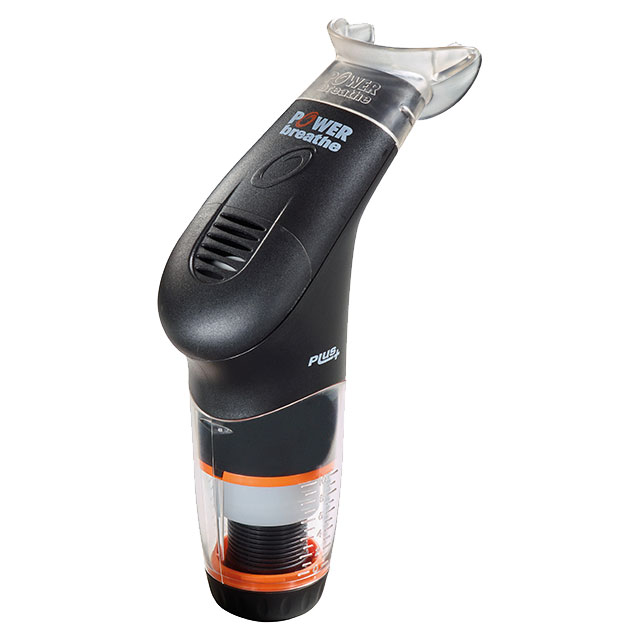
POWERbreathe Plus IMT
Strengthen your breathing muscles just like you would any other muscle group with the POWERbreathe Plus IMT. As with resistance training, the POWERbreathe Plus IMT provides you with resistance as you inhale, causing your chest muscles and diaphragm to work harder to boost overall strength, stamina and endurance. This device is easy-to-use and delivers noticeable results fast – within just a few days of consistent use, your breathing muscles will feel stronger. Within three weeks, you will experience reduced breathlessness,…
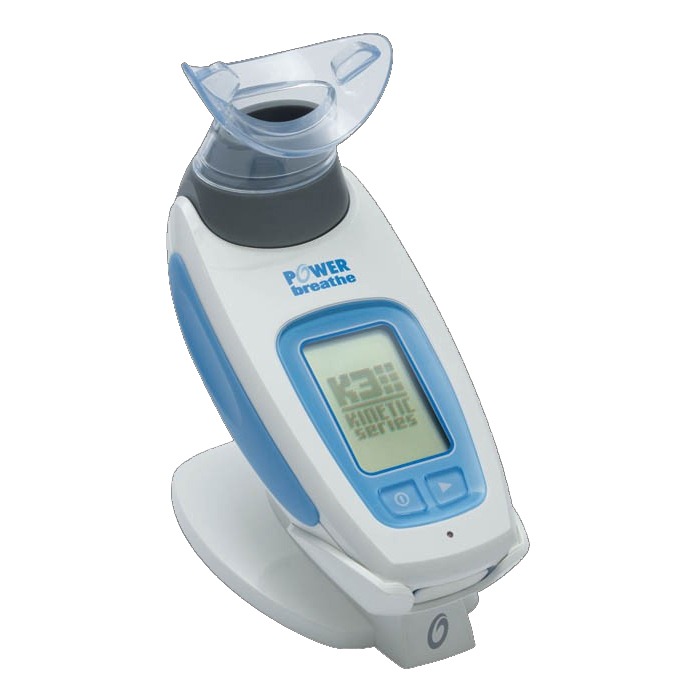
POWERbreathe K3 Electronic Inspiratory Breathing Trainer
The POWERbreathe K3 is part of the 3rd generation POWERbreathe Inspiratory Muscle Training (IMT) K-Series. This advanced model uses the same auto-optimising IMT technology as the K1 and K2 with the addition of extra features, including automatic warm up / cool down mode and graphical display of training sessions (up to 36 sessions can be stored).
Exercise Platforms for Respiratory Testing
Exercise platforms are essential for delivering controlled and repeatable testing conditions in an advanced respiratory function lab.
Treadmills from h/p/cosmos sports & medical gmbh are widely used in CPET and research settings due to their precision and reliability.
They support:
- VO₂ max testing
- Cardiopulmonary diagnostics
- Gait and biomechanics analysis
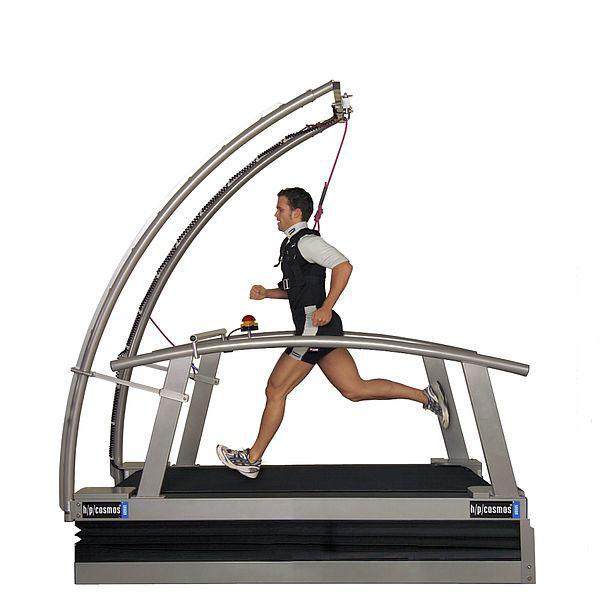
h/p/cosmos saturn Treadmill Ergometer
The h/p/cosmos saturn treadmill is an oversized treadmill with a reinforced belt which can accommodate running, cycling, skiing and is also suitable for wheelchair use. Completely unique and built to the highest standards, the h/p/cosmos saturn range are truly the world’s best treadmills.
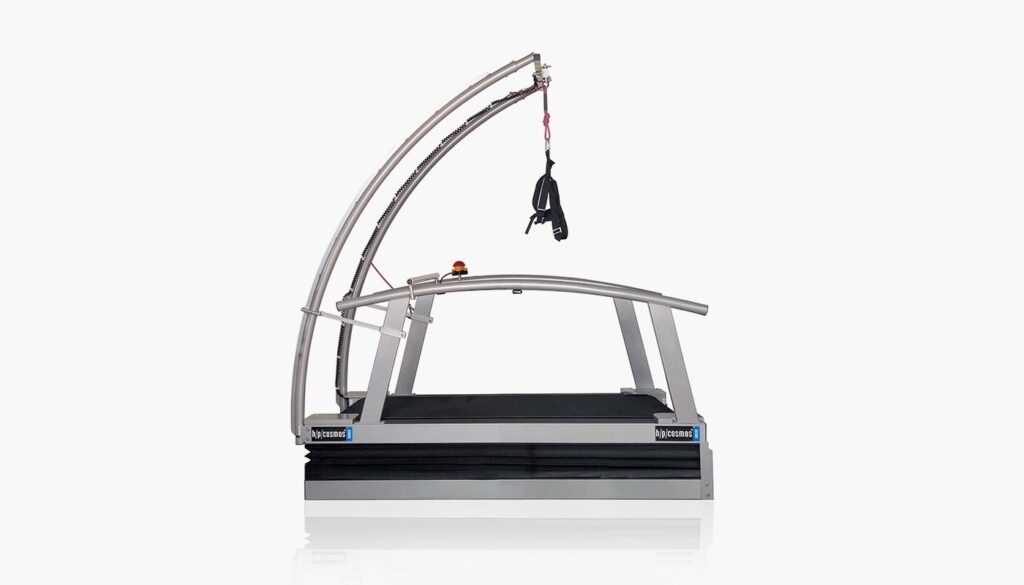
h/p/cosmos Venus Treadmill Ergometer
The unique h/p/cosmos venus treadmill is used by world-class sports performance facilities around the world, providing a platform for athletes and coaches to achieve high-performance training within the laboratory.
This gives the athlete and the coach the opportunity to simulate and conducting physiological testing that cannot be achieved during outdoor sessions.
Portable Respiratory Monitoring
Portable monitoring systems extend the capabilities of an advanced respiratory function lab beyond controlled environments, enabling continuous physiological assessment in real-world settings.
The Zephyr BioHarness provides a wearable, chest-mounted solution for real-time monitoring of key physiological parameters during movement. Unlike traditional laboratory-based respiratory testing, which is limited to short, controlled assessments, wearable systems allow for ongoing data collection during training, rehabilitation, and occupational activity.
The BioHarness enables continuous monitoring of:
- Respiratory rate (breaths per minute)
- Heart rate and heart rate variability (HRV)
- Activity levels and movement patterns (via accelerometry)
- Posture and physiological load
These measurements provide valuable insight into how individuals respond to physical stress outside the laboratory, complementing data obtained from spirometry and CPET within an advanced respiratory function lab.
The BioHarness has been extensively evaluated in peer-reviewed research, supporting its use in both laboratory and field environments.
Studies have demonstrated strong agreement between BioHarness-derived heart rate and respiratory rate measurements and those obtained from laboratory-based systems during graded exercise (Kim et al., 2013). Additionally, field-based validation studies have also confirmed that the BioHarness provides reliable physiological data during real-world activity, making it suitable for applied sports science and occupational monitoring (Johnstone et al., 2012).
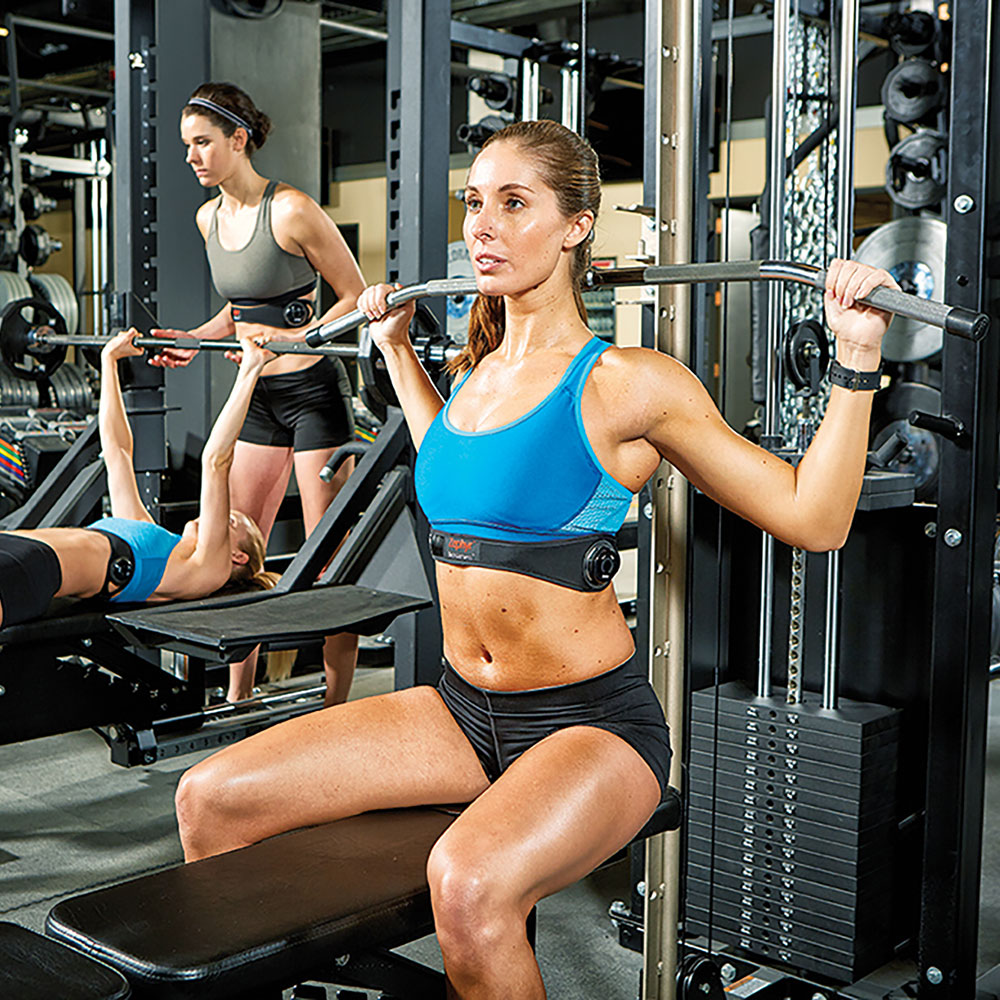
Zephyr Bioharness Physiological Status Monitoring System
Whether you need to measure an individual recovering from an injury or a number of users, Zephyr™ Performance Systems can be customised to let you do it.
Zephyr™ Performance Systems measure six key inputs that report on more than 20 biometrics. You’ll gain the insights you need to help improve performance wherever your people are tested — in sports, combat, emergency situations and research facilities.
Building a Complete Advanced Respiratory Function Lab
A fully integrated advanced respiratory function lab combines multiple systems to deliver comprehensive assessment:
| Equipment Category | Example Systems | Primary Use |
| Pulmonary Function Testing | PowerCube Body+, SpiroScout | Lung diagnostics |
| CPET | PowerCube Ergo | Metabolic analysis |
| Inspiratory Muscle Training | POWERbreathe range | Respiratory strength |
| Exercise Platforms | h/p/cosmos treadmills, Monark ergometers | Controlled testing |
| Portable Monitoring | BioHarness | Field analysis |
Build Your Advanced Respiratory Function Lab with HaB Direct
Designing an advanced respiratory function lab requires expertise in system integration, workflow design, and long-term support.
With decades of experience supporting NHS trusts, universities, and elite sports organisations, HaB Direct provides tailored solutions to help you build a laboratory that delivers accurate, reliable, and actionable data.
Contact us for more information and support for building your advanced respiratory function lab
References
American Thoracic Society and American College of Chest Physicians (2003) ATS/ACCP statement on cardiopulmonary exercise testing. American Journal of Respiratory and Critical Care Medicine, 167(2), pp. 211–277. Available at: https://doi.org/10.1164/rccm.167.2.211
Blair, S.N., Kohl, H.W., Paffenbarger, R.S., Clark, D.G., Cooper, K.H. and Gibbons, L.W. (2009) Physical fitness and all-cause mortality: a prospective study of healthy men and women. JAMA, 262(17), pp. 2395–2401. Available at: https://pubmed.ncbi.nlm.nih.gov/2795824/
Global Initiative for Chronic Obstructive Lung Disease (GOLD) (2023) Global strategy for the diagnosis, management, and prevention of COPD. Available at: https://goldcopd.org
Illi, S.K., Held, U., Frank, I. and Spengler, C.M. (2012) Effect of respiratory muscle training on exercise performance in healthy individuals: a systematic review and meta-analysis. Sports Medicine, 42(8), pp. 707–724. Available at: https://pubmed.ncbi.nlm.nih.gov/22765281/
Johnstone, J.A., Ford, P.A., Hughes, G., Watson, T. and Mitchell, A.C.S. (2012) Field based reliability and validity of the Bioharness™ multivariable monitoring device. Journal of Sports Science and Medicine, 11, pp. 643–652. Available at: https://pmc.ncbi.nlm.nih.gov/articles/PMC3763310/
Kim, J.H., Roberge, R., Powell, J., Shafer, A. and Jon Williams, W. (2013) Measurement accuracy of heart rate and respiratory rate during graded exercise and sustained exercise in the heat using the Zephyr BioHarness™. International Journal of Sports Medicine, 34(6), pp. 497–501. Available at: https://pmc.ncbi.nlm.nih.gov/articles/PMC4620538/
Mandsager, K., Harb, S., Cremer, P., Phelan, D., Nissen, S.E. and Jaber, W. (2018) Association of cardiorespiratory fitness with long-term mortality among adults undergoing exercise treadmill testing. JAMA Network Open, 1(6). Available at: https://doi.org/10.1001/jamanetworkopen.2018.3605
Poole, D.C. and Jones, A.M. (2017) Measurement of the maximum oxygen uptake VO₂max: VO₂peak is no longer acceptable. Journal of Applied Physiology, 122(4), pp. 997–1002. Available at: https://doi.org/10.1152/japplphysiol.01063.2016
Ross, R., Blair, S.N., Arena, R., Church, T.S., Després, J.P., Franklin, B.A., Haskell, W.L., Kaminsky, L.A., Levine, B.D., Lavie, C.J. and Myers, J. (2016) Importance of assessing cardiorespiratory fitness in clinical practice: a case for fitness as a clinical vital sign. Circulation, 134(24), pp. e653–e699. Available at: https://doi.org/10.1161/CIR.0000000000000461
Wanger, J., Clausen, J.L., Coates, A., Pedersen, O.F., Brusasco, V., Burgos, F., Casaburi, R., Crapo, R., Enright, P., van der Grinten, C.P.M., Gustafsson, P., Hankinson, J., Jensen, R., Johnson, D., MacIntyre, N., McKay, R., Miller, M.R., Navajas, D., Pellegrino, R. and Viegi, G. (2005) Standardisation of the measurement of lung volumes. European Respiratory Journal, 26(3), pp. 511–522. Available at: https://doi.org/10.1183/09031936.05.00035005


