
Creating a compact sports science lab is no longer a compromise. Across the UK, universities, clinics, and performance facilities are increasingly working within limited physical environments while still needing to deliver high-quality, data-driven assessments.
Traditionally, sports science labs were large, fixed spaces filled with specialist equipment. Today, advances in portable and integrated technology mean that a compact sports science lab can deliver comparable insights without requiring a dedicated facility. The key lies in selecting equipment that is flexible, multi-functional, and designed for efficient workflows (Pueo et al., 2020).
Space-Efficient Gait Analysis and Treadmill Testing
Gait analysis is often associated with large labs and long walkways, but a compact sports science lab can still deliver high-quality gait data with the right configuration.
Instrumented treadmills such as Gaitway 3D (which is available in multiple sizes) and pressure measurement systems enable continuous gait analysis in a confined space, offering reliable insights into spatiotemporal parameters and symmetry (Riley et al., 2007). Systems from h/p/cosmos and zebris allow practitioners to capture these metrics without requiring a full walkway setup.
In addition, the Gaitway 3D can also be utilised for VO2 max testing by pairing with either a Ganshorn Powercube Ergo for laboratory-grade CPET analysis or a portable gas analysis system like the Servomex MiniMP 5200 for flexible testing environments.
This approach is particularly valuable for physiotherapy clinics and rehabilitation environments where space must be shared between treatment and assessment.
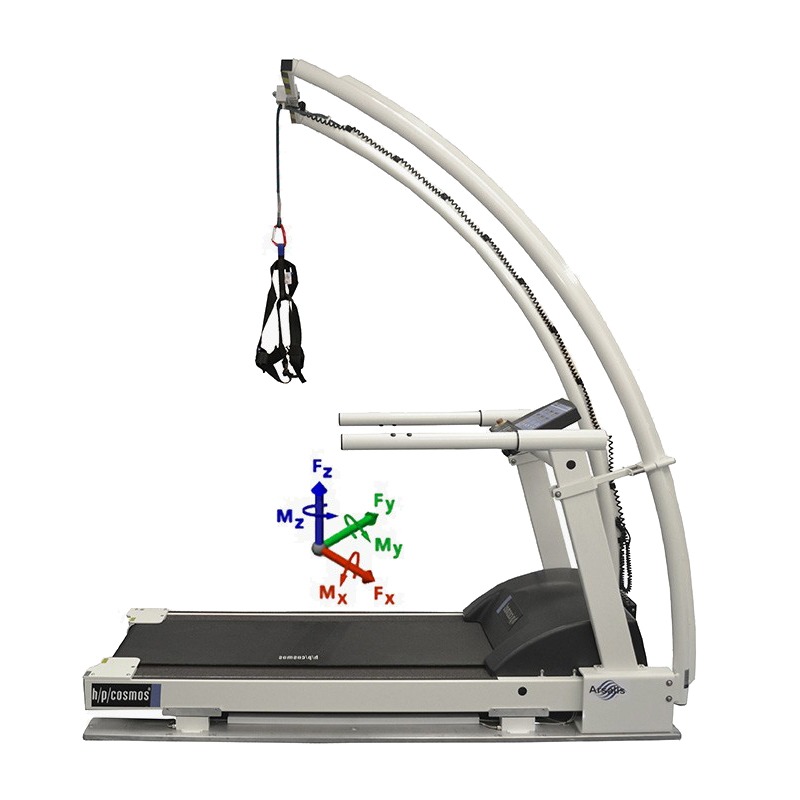
h/p/cosmos gaitway 3D Instrumented Treadmill Ergometer
The new gaitway 3D is a joint design by h/p/cosmos and Arsalis. It measures the ground reaction forces and torques in three directions and comes in three different sizes: each size is optimized for a range of speeds.
Multi-Functional Equipment Maximises Every Square Metre
In a compact sports science lab, every piece of equipment must provide clear value. Devices that deliver multiple outputs are essential for maximising limited space.
Body composition systems from seca, such as the mBCA range, provide detailed insights into fat mass, muscle mass, and hydration status within a single unit. Multi-frequency bioelectrical impedance analysis has been widely used in both clinical and performance settings to assess body composition efficiently (Kyle et al., 2004).

seca mBCA Alpha
The seca mBCA Alpha is a clinically validated body composition analyser that delivers precise results in just seconds. Using 8-point bioelectrical impedance analysis, it provides key metrics such as skeletal muscle mass, visceral fat, and fat mass. Allowing healthcare professionals to go far beyond BMI for more informed, personalised patient care.
Requires Annual Subscription, please contact us for details.

seca mBCA 525 Body Composition Analyser
The seca mBCA 525 is a portable, 8-point Bioelectrical Impedance Analysis (BIA) Analyser for determining body composition in a lying position.
Must be purchased with an annual seca 125 software license.
Similarly, portable analysers like the Akray Lactate Pro 2 and EKF Diagnostics Lactate Scout Sport enable rapid lactate assessment, supporting both laboratory and field-based testing. Lactate testing remains a key tool in monitoring exercise intensity and endurance performance (Faude, Kindermann and Meyer, 2009).
Creating a Flexible, Multi-Use Testing Environment
One of the defining characteristics of a successful compact sports science lab is flexibility. Rather than relying on fixed stations, modern facilities are moving towards adaptable setups that can be reconfigured depending on the session.
Agility and reaction-based systems like the Sportreact system allow practitioners to assess neuromuscular performance, reaction time, and change of direction speed within small spaces. These qualities are critical components of athletic performance and injury risk profiling (Sheppard and Young, 2006).
This flexible approach is particularly relevant in UK settings where space is often limited and shared across multiple functions.
Integrating Clinical Diagnostics into Small Spaces
A compact sports science lab is not limited to performance testing. Many facilities are now integrating clinical diagnostics to provide a more complete picture of health and performance.
Point-of-care testing systems from Roche enable rapid measurement of biomarkers such as HbA1c, lipids, and CRP. These systems have been shown to improve clinical efficiency and decision-making by reducing turnaround times (St John and Price, 2014).
In addition, haemoglobin testing plays an important role in monitoring athlete health and identifying conditions such as anaemia, which can directly impact performance (Sim et al., 2019).

Roche Cobas b 101 Blood Analyser
The Roche cobas b 101 is a one-stop in vitro diagnostics (IVD), point of care (PoC) device for the quantitative evaluation of clinical chemistry assays and immunoassays using the cobas b 101 test discs to measure HbA1c (glycated hemoglobin), lipids and CRP.
Hydration Testing in a Compact Sports Science Lab
Hydration status is a fundamental component of both performance and health, yet it is often one of the simplest metrics to measure within a compact sports science lab.
Urine specific gravity (USG) testing provides a quick and practical method for assessing hydration levels, making it widely used in both clinical and athletic environments (Sawka et al., 2007). Unlike more complex physiological testing, hydration assessment requires minimal space, no fixed setup, and very little time to perform.
Digital refractometers from Atago offer a reliable and efficient solution for USG measurement. These devices are compact, easy to use, and provide immediate readings, making them ideal for clinics, universities, and performance facilities operating within limited space.
Because of their portability, Atago devices can be used as part of routine athlete monitoring, pre-session screening, or clinical assessment without disrupting workflow. This aligns perfectly with the principles of a compact sports science lab, where efficiency and accessibility are key.
Hydration testing also complements other measurements such as body composition and blood biomarkers, helping to build a more complete picture of an individual’s physiological status. When combined with tools like body composition analysers and lactate testing systems, it supports a more holistic approach to performance monitoring.
Importantly, dehydration has been shown to negatively impact endurance, cognitive function, and overall physical performance, reinforcing the value of regular monitoring (Cheuvront and Kenefick, 2014).
In a compact sports science lab, hydration testing represents one of the most space-efficient ways to add meaningful, actionable data to your assessments.
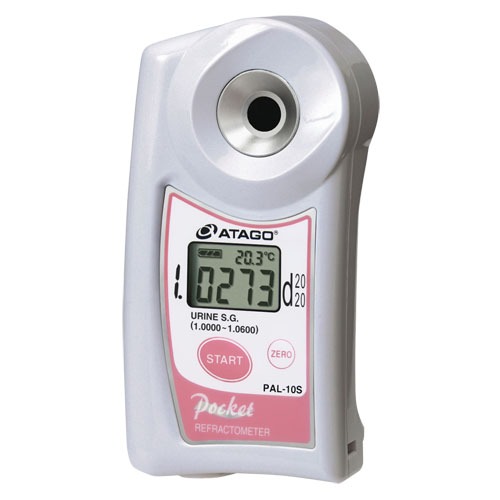
Atago “Pocket” PAL-10S Urine Specific Gravity Refractometer
With the popular Osmocheck now obsolete, we have sourced a new range of accurate urine analysis devices, including this hand-held, digital, “pocket-sized” urine specific gravity refractometer; the PAL-10S.
- The PAL-10S provides a measurement time of just 3 seconds.
- It is a simple and easy-to-use, handheld device for ‘in the field’ analysis.
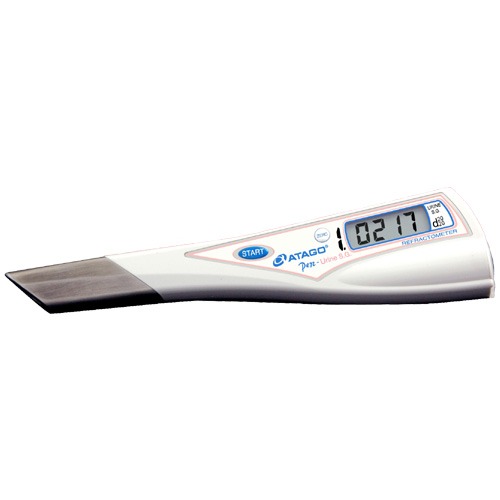
Atago Digital Hand-Held Urine Specific Gravity Refractometer PEN-Urine S. G.
With the popular Osmocheck now obsolete, we have sourced a new range of accurate urine analysis devices, including this Digital Hand-Held Urine Specific Gravity PEN-Urine S. G.
Using a simple ‘dip the tip’ sampling method, the PEN-Urine is fast and easy to use.
Portable Biomechanics as an Added Layer
Once core physiological and clinical testing is in place, biomechanics can be introduced as an advanced layer to capture movement and muscle activity without relying on fixed installations.
Wireless systems from Noraxon, such as Ultium EMG and Ultium Motion (IMU), are particularly well suited to smaller environments. Because these systems are fully wireless, they remove the need for cameras, cables, or permanent lab infrastructure.
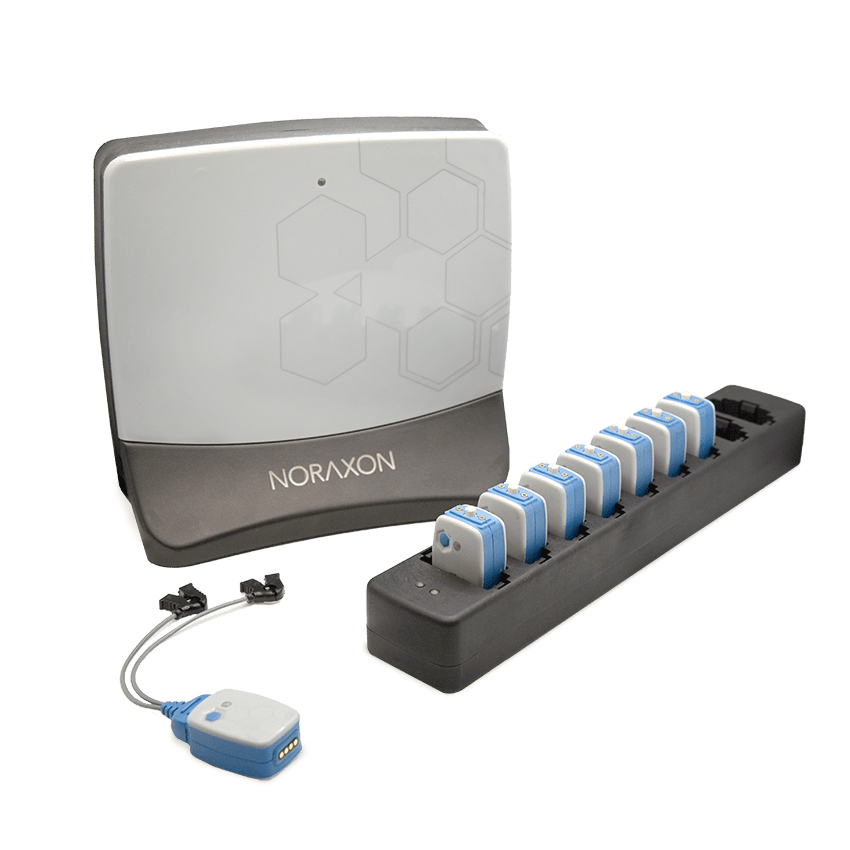
Noraxon Ultium Wireless Surface EMG
The Noraxon Ultium Wireless Surface EMG is a research-grade Wireless EMG system equipped with high sampling rate & resolution, low baseline noise, versatile SmartLead options, and powerful wireless communication.

Noraxon Core EMG
Introducing the Core EMG System – your solution for streamlined EMG data collection.
The small and lightweight wireless sensors transmit surface electromyography data directly from the electrode site with the Direct Connect sensor design, eliminating lead connections and the need for additional disposables like sensor tape.
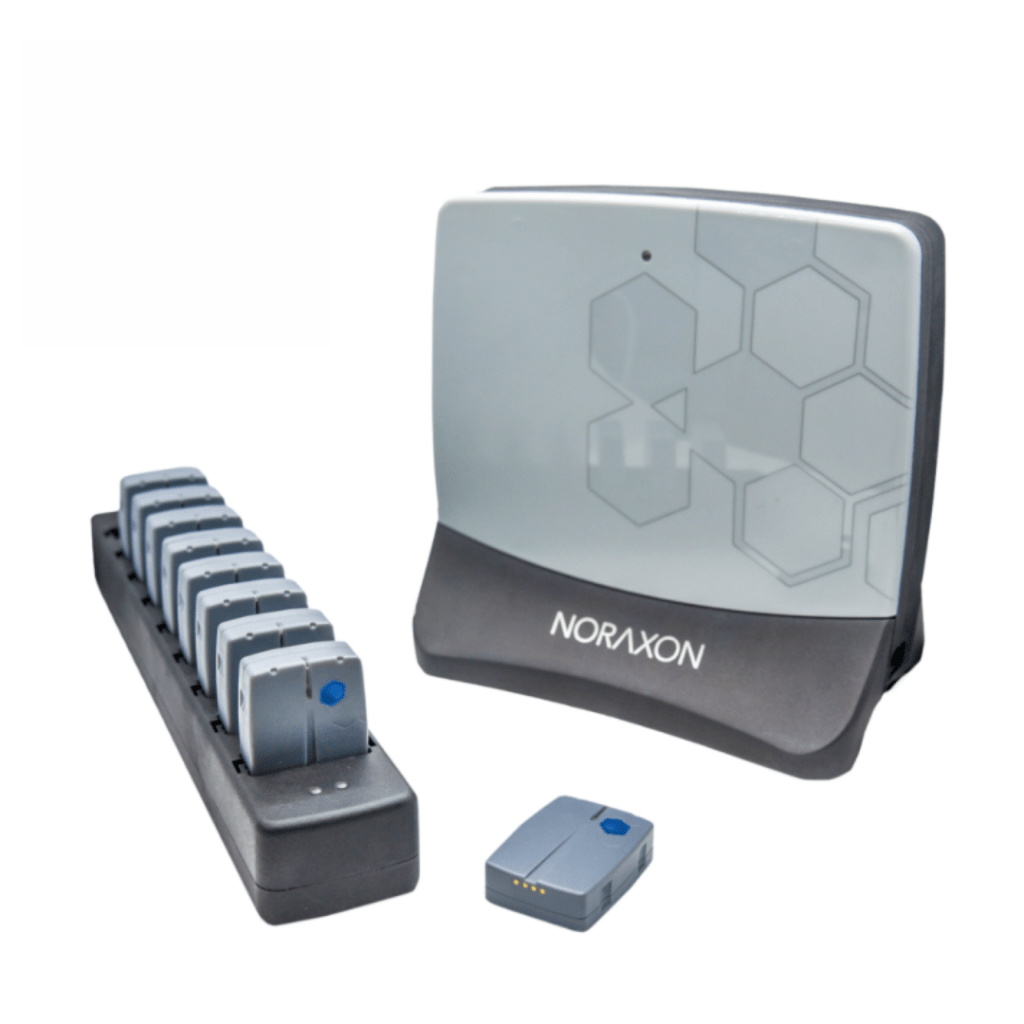
Noraxon Ultium Motion 3D Motion Capture/IMU System
The Noraxon Ulltium Motion 3D Capture System uses an array of inertial measurement units (IMUs) to measure anatomical joint angles, orientation angles, and linear acceleration in natural and lab-based environments.
This allows practitioners to carry out detailed biomechanical assessments in a clinic room, gym space, or even field-based environments. Wearable IMU systems have been shown to provide valid and reliable movement data outside traditional lab settings, supporting their use in applied environments (Picerno, 2017; Al-Amri et al., 2018).
However, movement data alone is only part of the picture. Ground reaction force and loading characteristics remain essential for understanding performance, asymmetry, and injury risk.
This is where portable force plate systems from Bertec can add significant value. Unlike traditional in-ground force plates, Bertec’s portable solutions allow you to capture highly accurate force and centre of pressure data in almost any environment.
These systems measure multi-directional forces and moments, providing detailed insight into how athletes produce and absorb force during movement. Because they are portable and require no permanent installation, they are ideal for a compact sports science lab, where flexibility and space efficiency are critical.
Importantly, portable force plates enable testing in more natural environments, which can improve ecological validity compared to fixed lab setups. This means practitioners can assess jumping, landing, balance, and gait in settings that better reflect real-world performance.

Bertec Portable Force Plates
Bertec portable force plates are designed for gait, balance, and performance analyses. Their patented strain gauge technology, innovative transducer designs, and quality manufacturing help you capture the highly accurate data needed for your research.
In a compact sports science lab, combining wearable biomechanics systems with portable force plates creates a powerful, space-efficient setup. You gain the ability to measure both movement and force without the need for a large, dedicated laboratory.
Designing an Efficient Layout
Equipment selection is only part of the equation. The layout of a compact sports science lab plays a crucial role in how effectively the space is used.
A zoned approach allows a single space to support multiple testing modalities. This aligns with broader trends in applied sport science, where testing is increasingly integrated into training environments rather than confined to laboratories (Bishop, Burnett and Farrow, 2006).
Wireless systems, compact devices, and integrated platforms all contribute to a more efficient and practical setup.
A Compact Sports Science Lab Without Compromise
The concept of a compact sports science lab reflects a broader shift in how performance and clinical testing is delivered. Facilities no longer need large, dedicated labs to collect meaningful data.
With the right combination of portable biomechanics systems, compact treadmills, multi-functional devices, and point-of-care diagnostics, it is possible to create a highly capable lab within a limited space.
HaB Direct supports universities, clinics, and performance facilities across the UK in building tailored solutions that maximise both space and budget. Need advice or are seeking to build your compact sports science lab? Contact us today using the form below!
References
Al-Amri, M. et al. (2018) ‘Inertial measurement units for clinical movement analysis: reliability and validity’, Sensors, 18(3), p. 719.
Bishop, D., Burnett, A. and Farrow, D. (2006) ‘Sports science roundtable: does sports-science research influence practice?’, International Journal of Sports Physiology and Performance, 1(2), pp. 161–168.
Cheuvront, S.N. and Kenefick, R.W. (2014) ‘Dehydration: physiology, assessment, and performance effects’, Comprehensive Physiology, 4(1), pp. 257–285.
Faude, O., Kindermann, W. and Meyer, T. (2009) ‘Lactate threshold concepts: how valid are they?’, Sports Medicine, 39(6), pp. 469–490.
Kyle, U.G. et al. (2004) ‘Bioelectrical impedance analysis—part I: review of principles and methods’, Clinical Nutrition, 23(5), pp. 1226–1243.
Picerno, P. (2017) ‘25 years of lower limb joint kinematics by using inertial and magnetic sensors: a review of methodological approaches’, Gait & Posture, 51, pp. 239–246.
Pueo, B. et al. (2020) ‘Accuracy and reliability of devices for measuring sport performance variables: a systematic review’, Sports Engineering, 23(1).
Riley, P.O. et al. (2007) ‘A kinematic and kinetic comparison of overground and treadmill walking in healthy subjects’, Gait & Posture, 26(1), pp. 17–24.
Sawka, M.N. et al. (2007) ‘American College of Sports Medicine position stand: exercise and fluid replacement’, Medicine & Science in Sports & Exercise, 39(2), pp. 377–390.
Sheppard, J.M. and Young, W.B. (2006) ‘Agility literature review: classifications, training and testing’, Journal of Sports Sciences, 24(9), pp. 919–932.
Sim, M. et al. (2019) ‘Iron considerations for the athlete: a narrative review’, European Journal of Applied Physiology, 119, pp. 1463–1478.
St John, A. and Price, C.P. (2014) ‘Existing and emerging technologies for point-of-care testing’, The Clinical Biochemist Reviews, 35(3), pp. 155–167.
Contact us
* indicates required fields


