
Choosing your first breathing trainer can raise a surprisingly common question: should you start with Light, Medium or Heavy resistance? The right POWERbreathe resistance level gives you a manageable starting point and room to progress. Choosing the highest resistance available can make it harder to establish a suitable training routine.
At HaB direct, we offer the POWERbreathe Plus IMT in Light, Medium and Heavy resistance options. This guide compares the Light, Medium and Heavy resistance ranges across the Plus and Classic inspiratory trainers and the EX1 expiratory trainer. It also explains how the electronic K-Series sets your training load and what each model offers.

How does POWERbreathe resistance work?
POWERbreathe Plus uses inspiratory muscle training, or IMT, to exercise the muscles you use to breathe in, including your diaphragm. Inhaling through the device makes these muscles work against an adjustable resistance.
A spring-loaded valve opens when you generate enough inspiratory pressure to overcome the selected load. This pressure is measured in centimetres of water, written as cmH₂O. A higher figure represents a higher breathing resistance.
Each resistance model is adjustable. Light, Medium and Heavy describe different load ranges, rather than three fixed settings. You can increase the challenge within your chosen model as your breathing muscle strength develops.
POWERbreathe Plus resistance levels compared
| Resistance option | Adjustable load range | Who should consider it? |
| Light | 17–98 cmH₂O | Beginners, less active users and anyone unsure where to start |
| Medium | 23–186 cmH₂O | Moderately fit to very fit users who need a higher training range |
| Heavy | 29–274 cmH₂O | Experienced users who have reached the maximum load on a Medium resistance device |
These ranges apply specifically to POWERbreathe Plus.
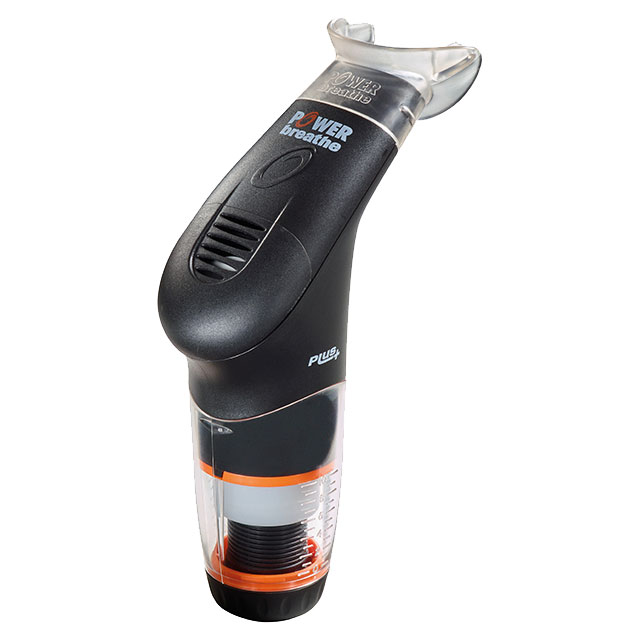
POWERbreathe Plus IMT
Strengthen your breathing muscles just like you would any other muscle group with the POWERbreathe Plus IMT. As with resistance training, the POWERbreathe Plus IMT provides you with resistance as you inhale, causing your chest muscles and diaphragm to work harder to boost overall strength, stamina and endurance. This device is easy-to-use and delivers noticeable results fast – within just a few days of consistent use, your breathing muscles will feel stronger. Within three weeks, you will experience reduced breathlessness,…
On the POWERbreathe Classic, all three models start at 10 cmH₂O. Light adjusts up to 90 cmH₂O, Medium up to 170 cmH₂O and Heavy up to 250 cmH₂O. Each Plus model starts higher and reaches a higher maximum than its Classic equivalent. For example, Classic Medium starts at 10 cmH₂O, while Plus Medium starts at 23 cmH₂O. If you’re switching between the two, use your current training load in cmH₂O to compare settings.
Light resistance: a practical starting point
If you are new to breathing training, Light is a sensible option to consider. POWERbreathe’s current selection chart states that most people will suit Light resistance when they are unsure.
Light may also suit people who exercise regularly. Being active does not automatically mean you need to start with Medium or Heavy. The manufacturer’s chart includes Light as an option for people exercising for more than 2.5 hours each week without breathing issues.
Choosing Light still leaves scope to progress: the resistance is adjustable, so you can build up the training load within the device’s range.
Medium resistance: for a higher training range
POWERbreathe describes Medium as suitable for people who are moderately fit to very fit. It offers a higher maximum load than Light, with larger increases between marked settings.
For someone training regularly, Medium may be appropriate, but consider your experience with breathing training alongside your general fitness. POWERbreathe’s selection chart recommends Medium for people without breathing issues who train at very high intensity for more than two hours a day.
Heavy resistance: a progression from Medium
Heavy resistance is intended for users who have already reached the highest load on a Medium resistance model. POWERbreathe specifically recommends completing that progression before moving to Heavy.
Even if you are very fit, Heavy should not be your default first choice. Establishing your breathing technique and finding an appropriate training load come first.
How do you choose the setting on your device?
After choosing your model, you still need to find the right setting within its range. POWERbreathe’s Plus guidance recommends starting at Level 0 and attempting 30 breaths using the correct technique.
As training becomes easier, increase the resistance gradually. The aim is a challenging load at which you can complete your session with the correct technique. The standard routine is 30 breaths twice daily. Follow the instructions supplied with your device, or your clinician’s prescribed programme.
How does resistance work on the POWERbreathe K-Series?
With the POWERbreathe Plus, you choose a resistance range when you buy the device and adjust the load using the dial. With the electronic K-Series, you choose a model based on the training features you want. The device controls the resistance electronically and can vary it during each inhalation.
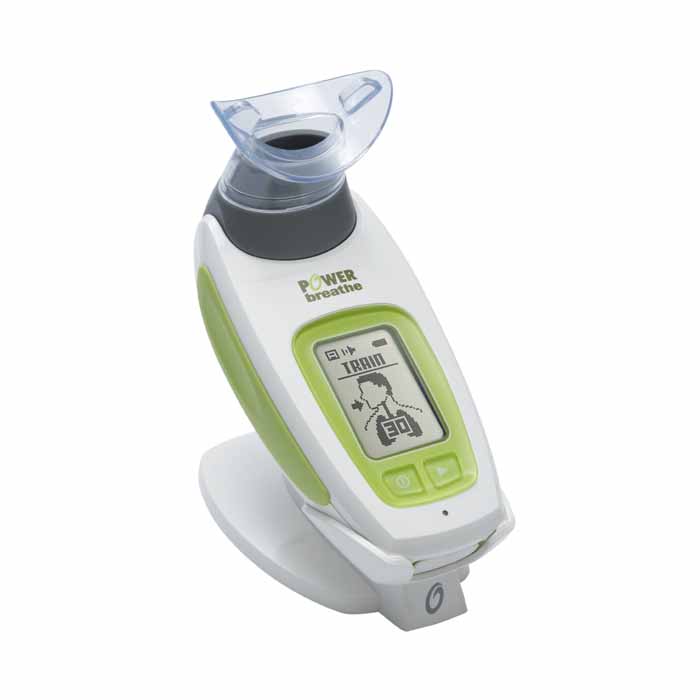
POWERbreathe K1 Electronic Inspiratory Breathing Trainer
The POWERbreathe K1 is the entry-level model in the POWERbreathe K-Series; it uses the same auto-optimising IMT technology as all K-Series models but includes fewer features, options and results.
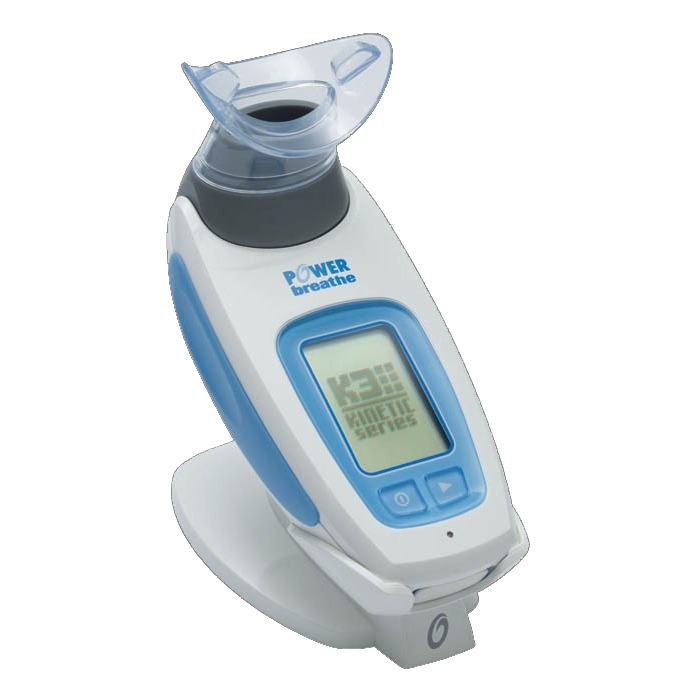
POWERbreathe K3 Electronic Inspiratory Breathing Trainer
The POWERbreathe K3 is part of the 3rd generation POWERbreathe Inspiratory Muscle Training (IMT) K-Series. This advanced model uses the same auto-optimising IMT technology as the K1 and…
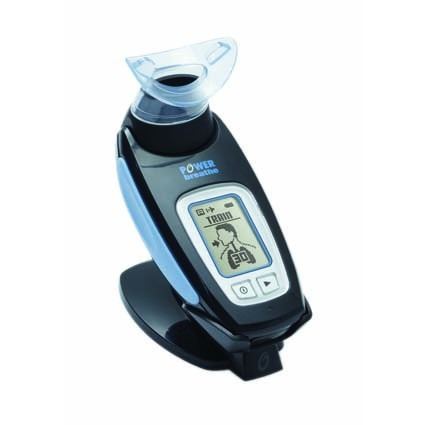
POWERbreathe K4 Electronic Inspiratory Breathing Trainer
The POWERbreathe K4 offers elite breathing training for individuals whose goal it is to be at the top of their game. The Breathe-Link Software lets you take the guesswork out of your training; monitor and…
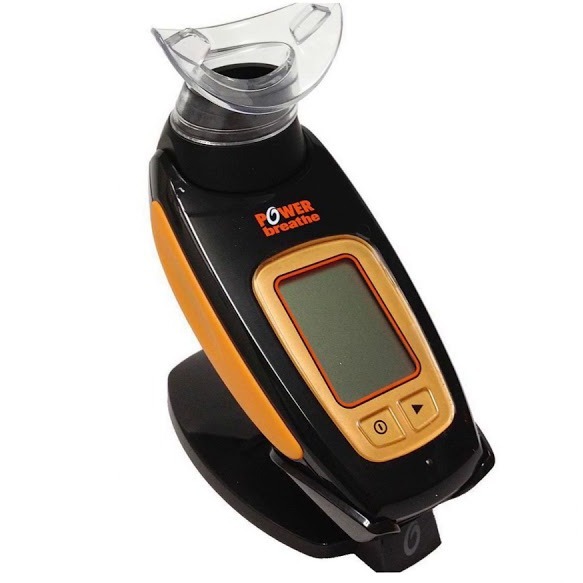
POWERbreathe K5 Electronic Inspiratory Breathing Trainer
The POWERbreathe K5 offers elite training for individuals, personal trainers and group training/coaching environments.
With the K5 Breathe-Link software for PC / Mac, you can maximise breathing performance by monitoring and analysing training and test results, on screen, in pdf and in print.
Which POWERbreathe K-Series model should you choose?
All five models guide your breathing pace, count the breaths remaining in a session and show training load, average power and average inhaled volume. Each has a rechargeable battery and a removable, washable valve head.
| Model | Main features |
| K1 | Guided inspiratory muscle training with session results on the handset. A straightforward option if you want to see how you performed after each session. |
| K3 | Adds warm-up and cool-down modes, a Training Index (T-Index) score and graphs of the last 36 sessions on the handset. It also includes the single-breath test, so you can track changes in breathing strength alongside your training. |
| K4 | Connects by USB to Breathe-Link software for live, breath-by-breath feedback and review on a computer. It includes the single-breath test and tracks breathing energy, the work done by your breathing muscles during a session. |
| K5 | Adds Breathe-Link Pro View for more detailed analysis and Custom Mode for building sessions with your own breath count and load. It also supports up to 30 user profiles in the software, which can help coaches track individual athletes. |
Which POWERbreathe EX1 EMT resistance level should you choose?
The POWERbreathe EX1 is an expiratory muscle trainer (EMT). It adds resistance when you breathe out, exercising the muscles you use to exhale. The POWERbreathe Plus and K-Series work in the opposite direction, adding resistance when you breathe in. Both types measure pressure in cmH₂O, so check whether the figure refers to breathing in or out when comparing models.

POWERbreathe EX1 EMT Expiratory Trainers
POWERbreathe, the world leader in breathing training, has applied its expertise in inspiratory muscle training (IMT) to expiratory muscle training (EMT), with its new range of POWERbreathe EX1 EMT devices.
The EX1 uses a spring-loaded valve that opens once you generate enough pressure on the out-breath. Each model has a dial with settings from 0 to 10, so you can increase the load within its range as you progress.
| EX1 model | Adjustable load range | Who should consider it? |
| Light | 10–80 cmH₂O | People new to expiratory muscle training. |
| Medium | 35–175 cmH₂O | Moderately to very fit users who can manage a higher starting load. |
| Heavy | 55–220 cmH₂O | Users who have reached the highest setting on the EX1 Medium. |
The ranges overlap, but the steps between settings differ. At setting 1, for example, EX1 Light is set to 17 cmH₂O, Medium to 49 cmH₂O and Heavy to 72 cmH₂O. Use the pressure in cmH₂O to compare settings across models.
What if you have a breathing condition?
If you have a respiratory condition or another relevant medical condition, speak to a healthcare professional before choosing a device and starting IMT. POWERbreathe also offers Medic Plus, which has a lower starting load than the standard Plus Light model.
Read the precautions and contraindications before use. Training should not be painful, and you should stop and consult your doctor if you experience pain. Do not change prescribed medication or treatment without medical advice.
Choose your POWERbreathe breathing trainer with HaB direct
Start with the muscles you want to train. The POWERbreathe Classic, Plus and K-Series add resistance as you breathe in, while the EX1 adds resistance as you breathe out.
If you choose a Classic, Plus or EX1, compare the load ranges in cmH₂O to find a manageable starting point with room to progress. Light is a good starting point if you’re new to training, while Heavy is designed for users who have reached the top setting on their Medium model. The K-Series models share the same manual starting load range, so choose based on the features you’ll use, such as session history, live feedback or custom training.
If you’d like help comparing models or choosing a starting resistance, speak to our team through the enquiry form below.
Contact us
* indicates required fields


