

The European Athletics Championships took place in Birmingham from 10 to 16 August 2026. Across seven days of competition, some of the continent’s leading athletes faced the challenge of performing repeatedly through qualifying rounds, heats, semi-finals and finals (European Athletics, 2026), highlighting the importance of athlete recovery.
At a major athletics championship, producing one outstanding performance may not be enough. Sprinters, hurdlers and middle-distance runners may need to progress through heats and semifinals before reaching a final, while combined-event athletes face repeated physical and mental demands across several disciplines. Even athletes competing in a single final must manage training, travel, warm-ups and the accumulated strain of championship week.
Behind every performance was a carefully planned approach to preparation and recovery. For athletes and their support teams, the challenge was not simply to eliminate tiredness, but to restore the physical and psychological qualities required for the next performance.
Sports scientists can help by combining physiological measurements with athlete feedback and practical recovery strategies. Blood lactate, heart rate, training load, muscle soreness, sleep and general wellbeing can each contribute useful information, but no single result can provide a complete measure of readiness.
What Does Recovery Between Rounds Involve?
Recovery is a broad term covering several processes. Following a demanding race or field event, an athlete may need to restore energy, rehydrate, regulate body temperature and recover from muscular, cardiovascular and respiratory strain. They must also eat, sleep and manage the psychological pressure of returning for another round.
The most relevant factors will depend on the event. A 100-metre sprint places different demands on the body from a 10,000-metre race, while repeated jumps or throws create their own patterns of neuromuscular fatigue. The amount of time available also matters. Recovery between sessions on the same day is very different from preparing for a final 24 or 48 hours later.
Rather than relying on one measurement, practitioners may build a wider picture using objective data and subjective feedback. This can help them decide how much rest an athlete needs, when to begin the next warm-up and whether any element of the recovery plan should be adjusted.
What Can Blood Lactate Tell Practitioners?
Blood lactate testing is widely used in sport and exercise science to examine the body’s metabolic response to exercise. Lactate concentration generally rises when its rate of production exceeds the rate at which it can be transported and used or cleared. Measuring it at selected points following exercise can show how an athlete responded to the effort and how their blood lactate concentration changes during the early recovery period.
This information can be particularly useful during training sessions designed to recreate the demands of competition. Practitioners can compare responses across repeated efforts, evaluate the demands of different pacing strategies and individualise recovery periods within a session.
Portable analysers such as the EKF Diagnostics Lactate Scout Sport allow blood lactate measurements to be taken in the field, gym or laboratory. This makes testing easier to incorporate into track sessions and performance assessments. The Arkray Lactate Pro 2 provides another portable option, while the EKF Diagnostics Biosen C-Line supports higher-volume lactate and glucose testing in the laboratory.
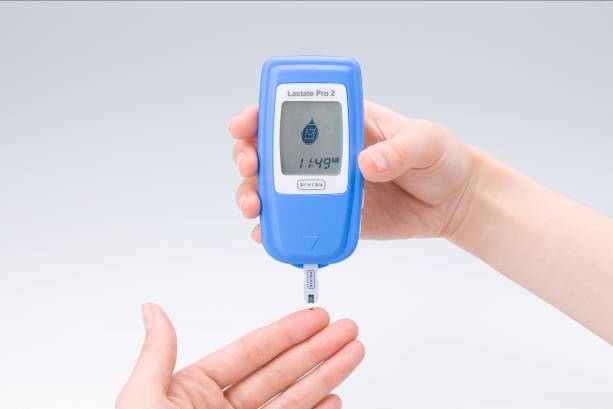
Blood lactate should not, however, be treated as a complete measure of recovery. Lactate itself is not simply a waste product responsible for muscle soreness, and a reduction in blood lactate does not necessarily mean that energy stores, neuromuscular function and performance capacity have been fully restored. Research comparing active and passive recovery has demonstrated differences in lactate removal, but lactate kinetics remain only one part of the recovery process (Taoutaou et al., 1996).
For this reason, lactate results should be interpreted alongside the demands of the event, the athlete’s normal responses and other recovery indicators.
Monitoring Heart Rate, Training Load and Sleep
Wearable technology can help athletes and coaches monitor the workload accumulated before and during a championship. Depending on the device and settings used, this may include exercise heart rate, heart-rate recovery, training duration, pace, distance, sleep and longer-term training-load trends.
Suunto sports watches provide athletes with a practical way to record everyday training and observe patterns over time. This can help coaches understand how an athlete has prepared for competition and how much additional activity is taking place around their main event. Sleep and recovery data may also help to provide context when assessing changes in performance or perceived readiness.

For more detailed physiological monitoring, the Zephyr BioHarness can capture and transmit data such as heart rate, heart-rate variability, heart-rate recovery, breathing rate, activity, posture and acceleration. The system can be configured to monitor an individual athlete or multiple wearers, making it particularly relevant to sports teams, performance centres and research environments.

By combining physiological and movement-related data, the BioHarness can help practitioners examine how an athlete responds during exercise and subsequent recovery. For example, heart-rate recovery and breathing-rate data may provide additional context when assessing the demands of a training session or repeated effort. However, these measurements should be considered alongside the athlete’s established baseline, subjective feedback and other recovery indicators.
Heart-rate data is most valuable when the collection method is consistent and the athlete has an established baseline. Resting heart rate, heart-rate variability and post-exercise heart-rate recovery can all be affected by exercise intensity, sleep, illness, hydration, emotional stress and environmental conditions. A single unusual reading should therefore be investigated in context rather than used alone to decide whether an athlete is ready to compete.
Research supports the use of heart-rate measures for monitoring fatigue, fitness and responses to endurance training, but also highlights the importance of selecting the right measure and interpreting it carefully (Buchheit, 2014). More recent work on heart-rate variability similarly recommends frequent, standardised measurements and the use of trends rather than isolated results (Esco et al., 2025).
Can Cold-Water Immersion Support Athlete Recovery?
Cold-water immersion is one of the most recognisable recovery methods in elite sport. It involves immersing part or all of the body in cold water for a controlled period following exercise. Athletes may use it to manage muscle soreness and perceived fatigue during periods of intensive training or competition.
Systematic reviews suggest that cold-water immersion can support some aspects of short-term recovery following strenuous exercise. Reported benefits are particularly associated with perceived muscle soreness, while effects on physical performance and physiological markers vary according to the exercise, water temperature, immersion duration and time between performances (Moore et al., 2023; Xiao et al., 2023).

The CET CryoSpa Sport provides temperature-controlled cold-water immersion combined with hydrotherapy jets. It can accommodate between two and four athletes, making it suitable for sports teams, universities and high-performance facilities that need to manage several recovery sessions efficiently. CET also offers individual, team and contrast-therapy configurations for different facilities and athlete requirements.
A CryoSpa should be viewed as one component of a wider recovery strategy. Cold-water immersion cannot replace adequate sleep, nutrition, hydration or appropriate medical care. The protocol should also be selected for the individual athlete and the intended outcome rather than applied automatically after every session.
Preparing the Breathing Muscles for Repeated Performance
During intense exercise, the muscles responsible for breathing must work harder to meet the body’s ventilatory demands. Like other skeletal muscles, the inspiratory muscles can become fatigued. This may be particularly relevant in endurance and repeated high-intensity events where ventilation remains elevated for sustained periods.
POWERbreathe inspiratory muscle training applies resistance during inhalation, providing a structured way to train the inspiratory muscles. It is best incorporated into an athlete’s longer-term conditioning programme rather than presented as a quick intervention that guarantees recovery immediately after a race.

Research has found that inspiratory muscle training can improve recovery time during high-intensity intermittent exercise in repeated-sprint athletes, although outcomes depend on the athlete, training protocol and performance task (Romer, McConnell and Jones, 2002). Studies of inspiratory muscle warm-up have also produced mixed results across different activities, reinforcing the need for event-specific practice rather than a universal approach.
The POWERbreathe Smart Adaptor and ActiBreathe App can be used to conduct breathing-strength tests and monitor structured breathing training when combined with a POWERbreathe Plus IMT or POWERbreathe EX1 EMT device. This provides athletes and practitioners with objective information that can complement other areas of performance monitoring.
The Difference Between Recovery Monitoring and ECG Assessment
Heart rate and workload information can contribute to everyday performance monitoring, but an electrocardiogram, or ECG, serves a different purpose. An ECG records the electrical activity of the heart and is used by qualified healthcare professionals as part of cardiac assessment.
In sport, a resting 12-lead ECG may be used during pre-participation screening or when investigating symptoms and suspected abnormalities. ECG technology can also form part of exercise testing and cardiopulmonary exercise testing when used with appropriate protocols and clinical oversight.
The seca CardioPad-2 is a portable 12-lead ECG system with an optional ETM Sport interpretation module designed for athlete ECG assessment. HaB Direct also supplies ECG and exercise-testing solutions from SCHILLER for clinical and performance-testing environments such as the Schiller CARDIOVIT FT-1 Resting ECG Device.
An ECG should not be used as a routine score of whether an athlete has recovered between rounds. Its role is cardiac assessment and athlete safety. Symptoms such as chest pain, fainting, palpitations, dizziness or unusual breathlessness require appropriate clinical evaluation rather than a standard recovery intervention.
Athlete ECGs also require specialist interpretation. Long-term training can produce electrical and structural adaptations that may be normal in an athlete but could be mistaken for pathology without suitable expertise. The European Society of Cardiology recognises the value of 12-lead ECG within athlete assessment while emphasising the importance of appropriate interpretation and further investigation where necessary (European Society of Cardiology, 2021).
Why Athlete Feedback Still Matters
Sophisticated equipment can provide valuable objective data, but the athlete’s own experience remains essential. Practitioners may ask about muscle soreness, sleep quality, appetite, mood, perceived exertion and how the body feels during the next warm-up.
These observations can reveal issues that are not immediately evident in a single physiological measurement. For example, blood lactate may have returned towards its pre-exercise level while the athlete still reports heavy legs, poor sleep or unusual discomfort. Conversely, a result outside the athlete’s typical range may have a straightforward explanation, such as disrupted travel or a change in measurement conditions.
The most useful monitoring systems are therefore individualised. They establish what is normal for that athlete, collect measurements consistently and focus on information that can influence a practical decision.
Turning Recovery Data Into Decisions
Following a demanding performance, a sports science and medical team might combine blood lactate results, heart-rate responses, hydration, muscle soreness and perceived exertion. They may then use this information to guide refuelling, rehydration, rest, cold-water immersion and the timing of the next warm-up.
The purpose is not to collect the greatest possible quantity of data. It is to select appropriate measurements, understand their limitations and translate the results into useful decisions.
No device or recovery method can guarantee the next performance. However, when equipment is used consistently and interpreted by appropriately qualified practitioners, it can help teams understand how an athlete is responding and make more informed choices during the narrow window between one round and the next.
Supporting Athlete Testing, Monitoring and Recovery
Major championship performances are built long before an athlete enters the stadium. Training, testing, recovery and medical assessment all contribute to the preparation required to perform repeatedly under pressure.
HaB Direct supplies sports science and medical equipment for athlete testing, monitoring and recovery, including portable lactate analysers, Suunto sports watches, the Zephyr BioHarness, POWERbreathe inspiratory muscle trainers, CET CryoSpas and ECG systems from seca and SCHILLER.
Contact the HaB Direct team to discuss equipment for your sports science laboratory, performance facility, university or clinical environment.
References
Buchheit, M. (2014) ‘Monitoring training status with HR measures: do all roads lead to Rome?’, Frontiers in Physiology, 5, 73. Available at: https://pubmed.ncbi.nlm.nih.gov/24578692/
Esco, M.R., Fields, A.D., Mohammadnabi, M.A. and Kliszczewicz, B.M. (2025) ‘Monitoring training adaptation and recovery status in athletes using heart rate variability via mobile devices: A narrative review’, Sensors, 26(1), 3. Available at: https://pubmed.ncbi.nlm.nih.gov/41516438/
European Athletics (2026) ‘European Athletics Championships overview’. Available at: https://www.european-athletics.com/home/competitions/european-athletics-championships/overview
European Society of Cardiology (2021) ‘How do you prevent sudden death during sports activities?’. Available at: https://www.escardio.org/communities/councils/cardiology-practice/scientific-documents-and-publications/ejournal/volume-19/how-do-you-prevent-sudden-death-during-sports-activities/
Moore, E., Fuller, J.T., Buckley, J.D., Saunders, S., Halson, S.L., Broatch, J.R. and Bellenger, C.R. (2023) ‘Effects of cold-water immersion compared with other recovery modalities on athletic performance following acute strenuous exercise in physically active participants: A systematic review, meta-analysis, and meta-regression’, Sports Medicine, 53, pp. 687–705. Available at: https://pubmed.ncbi.nlm.nih.gov/36527593/
Romer, L.M., McConnell, A.K. and Jones, D.A. (2002) ‘Effects of inspiratory muscle training upon recovery time during high intensity, repetitive sprint activity’, International Journal of Sports Medicine, 23(5), pp. 353–360. Available at: https://pubmed.ncbi.nlm.nih.gov/12165887/
Taoutaou, Z., Granier, P., Mercier, B., Mercier, J., Ahmaidi, S. and Prefaut, C. (1996) ‘Lactate kinetics during passive and partially active recovery in endurance and sprint athletes’, European Journal of Applied Physiology and Occupational Physiology, 73, pp. 465–470. Available at: https://pubmed.ncbi.nlm.nih.gov/8803508/
Xiao, F., Kabachkova, A.V., Jiao, L. and Zhao, H. (2023) ‘Effects of cold water immersion after exercise on fatigue recovery and exercise performance: Meta analysis’, Frontiers in Physiology, 14, 1006512. Available at: https://pubmed.ncbi.nlm.nih.gov/36744038/


