
An existing h/p/cosmos treadmill ergometer can provide the foundation for a more comprehensive gait analysis setup. Depending on the model and configuration, facilities can explore integrated pressure measurement, wearable movement sensors, surface electromyography (sEMG), video and body weight support.
This article looks at the practical considerations involved in expanding a treadmill installation. The starting point is deciding what you need to measure and checking which additions are suitable for your equipment.

Start with the assessment you want to perform
A university laboratory investigating running mechanics will have different requirements from a physiotherapy service supporting people with walking difficulties. Before selecting equipment, consider whether your priority is foot loading, joint movement, muscle activation or supported gait training.
A treadmill ergometer allows multiple steps to be assessed at a controlled walking or running speed. zebris describes treadmill-based gait analysis as a way to examine repeated gait cycles at constant or changing speeds.
For an existing installation, record the treadmill model, serial number, running surface dimensions and control system. These details help establish the available upgrade options. Where the intended use includes medical assessment or therapy, the treadmill’s approved intended purpose also needs to match that application.
Add integrated pressure measurement with zebris
An h/p/cosmos treadmill equipped with zebris technology has a pressure sensor matrix beneath the running belt. Thousands of individually calibrated sensors measure pressure distribution under the feet during walking or running, with software producing evaluation reports.
This adds information about foot contact and loading to the assessment. Alongside visual observation, users can examine how pressure is distributed through successive steps and use the recorded data to inform further investigation.
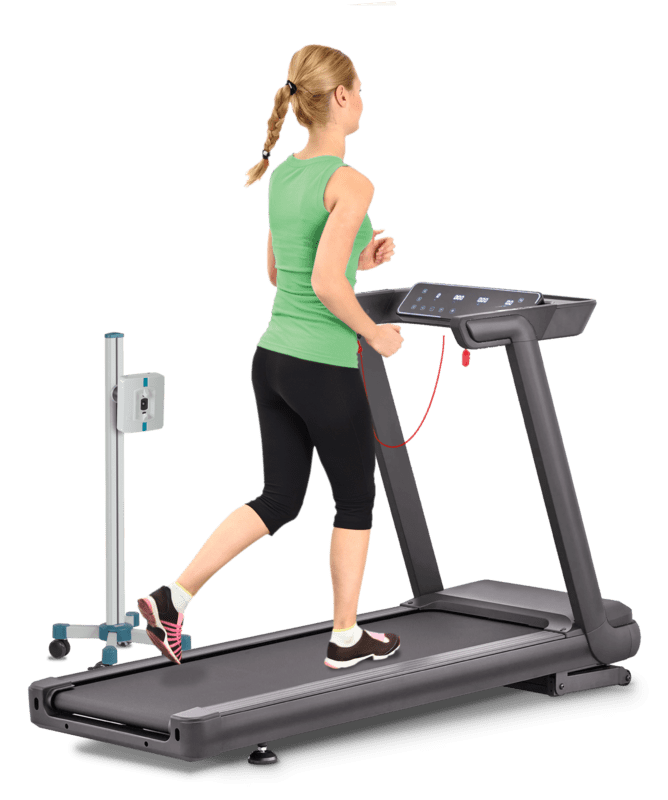
zebris FDM-T Treadmill System for Gait Analysis
The zebris FDM-T System is especially designed to analyse dynamic gait patterns, integrated with an existing treadmill machine. This sophisticated, first-rate system is invaluable to physiotherapists and researchers alike as it captures and analyses natural gait movement in a broad variety of different conditions.
Can zebris be added to an existing treadmill?
Retrofit options do exist for selected h/p/cosmos treadmill series. The manufacturer’s quasar and pulsar brochures explicitly state that these treadmills can be equipped or retrofitted with an integrated zebris pressure distribution platform.
However, this should not be treated as confirmation that every existing treadmill is suitable. The exact model, generation, running deck and proposed configuration need to be assessed before an upgrade is specified. HaB Direct can help establish whether an integrated zebris installation is a suitable route for your equipment.
Explore movement and muscle activity with Noraxon
Noraxon systems offer additional ways to assess someone walking or running on a treadmill. Wearable sensors and cameras can be used around the treadmill, while the choice of hardware and software determines the measurements available.
Noraxon Ultium Motion uses wearable inertial sensors to capture three-dimensional movement, including joint trajectories, acceleration and changes in movement patterns. This provides a way to explore how body segments move during an assessment.
Surface EMG adds a different perspective. Noraxon Ultium EMG can be used to examine muscle activation patterns and coordination through the gait cycle. Synchronised video from NiNOX cameras provides a visual reference alongside the measurements.
For example, a setup might combine movement sensors to assess lower-limb kinematics with EMG to investigate activation timing. Selecting the equipment around a defined question keeps the assessment focused and helps avoid collecting data that the team does not need.
Noraxon’s software supports synchronised collection from compatible integrated devices. Where zebris pressure data is also required, the specific hardware, interfaces and software modules should be confirmed during planning.
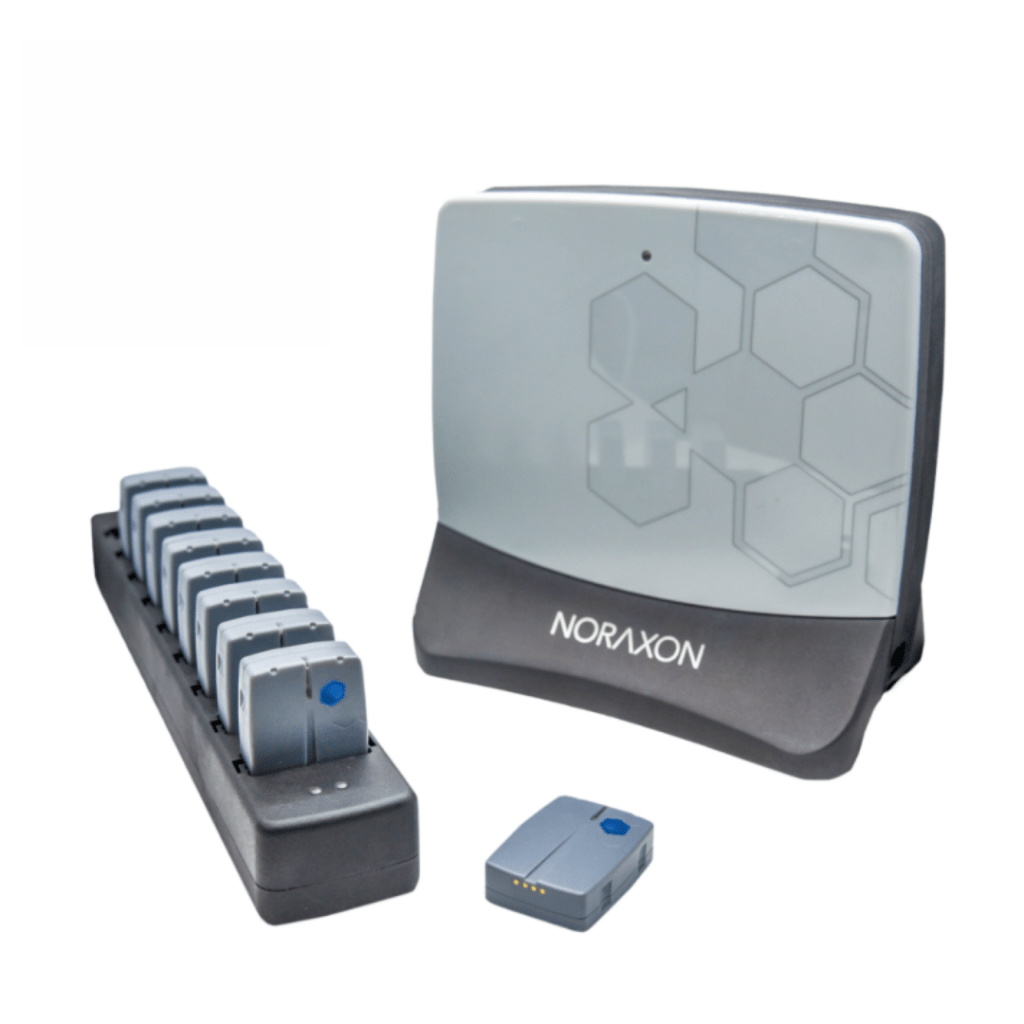
Noraxon Ultium Motion 3D Motion Capture/IMU System
The Noraxon Ulltium Motion 3D Capture System uses an array of inertial measurement units (IMUs) to measure anatomical joint angles, orientation angles, and linear acceleration in natural and lab-based environments.
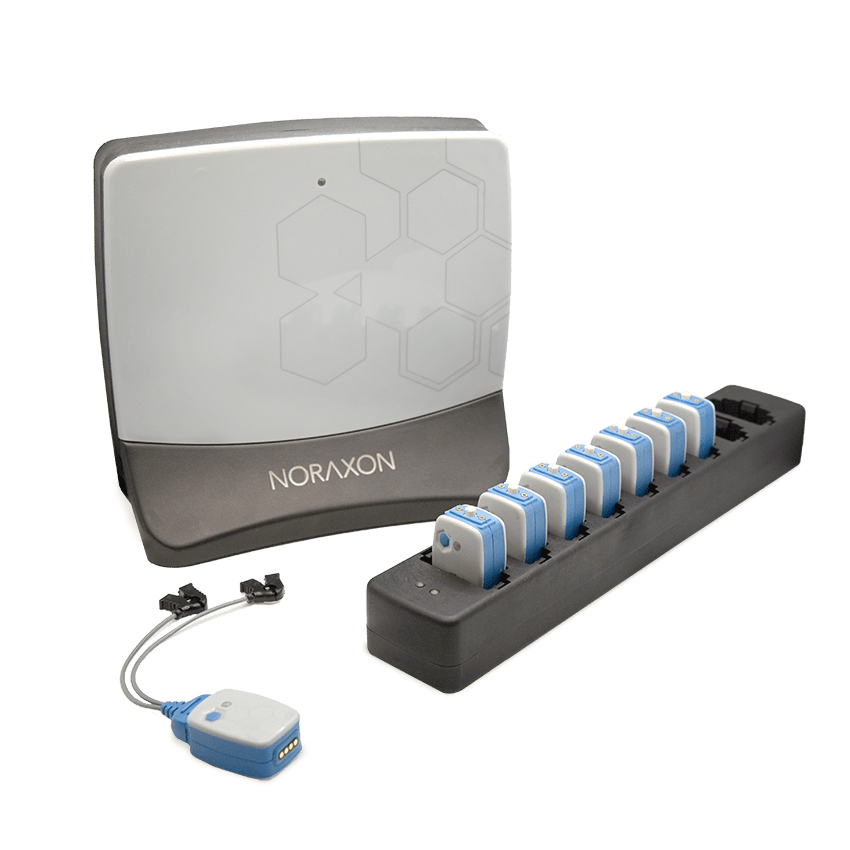
Noraxon Ultium Wireless Surface EMG
The Noraxon Ultium Wireless Surface EMG is a research-grade Wireless EMG system equipped with high sampling rate & resolution, low baseline noise, versatile SmartLead options, and powerful wireless communication.

Noraxon Core EMG
Introducing the Core EMG System – your solution for streamlined EMG data collection.
The small and lightweight wireless sensors transmit surface electromyography data directly from the electrode site with the Direct Connect sensor design, eliminating lead connections and the need for additional disposables like sensor tape.
Consider markerless analysis with the 3D kinematics tower
The h/p/cosmos 3D kinematics tower offers another route to movement analysis, capturing three-dimensional motion without reflective markers or wearable sensors.
As covered in our recent announcement, the tower can be supplied with new installations or retrofitted to compatible existing systems. For facilities already using an h/p/cosmos treadmill with zebris pressure measurement, it offers a potential way to add movement information to their pressure analysis.
The choice between markerless capture and wearable sensors should follow the intended assessment, preparation workflow and reporting requirements.
Plan for rehabilitation with h/p/cosmos locomotion
For a service delivering supported walking therapy, patient access and therapist positioning are central to the equipment choice.
The h/p/cosmos locomotion system is designed around these practical needs. Its recommended configuration includes a wheelchair ramp and handrails with telescopic extensions, helping patients access the treadmill. Adjustable, rotating therapist seats and foot supports allow therapists to position themselves beside the belt with access to the patient’s legs.
This makes locomotion relevant when planning a dedicated rehabilitation setup. Adding measurement technology to an existing treadmill may expand assessment capability, while a purpose-designed therapy configuration addresses the physical requirements of delivering assisted gait training.
h/p/cosmos locomotion Rehabilitation Treadmill Ergometer
Those who want to learn to walk … must walk! Therefore, functional training on a treadmill is a key component of a neurological treatment facility. At the same time locomotion in practice is not always easy to implement. It starts when a wheelchair patient begins their therapy.
The h/p/cosmos locomotion system has been optimised for both patient and therapist in neurological rehabilitation.
Add body weight support with airwalk ap
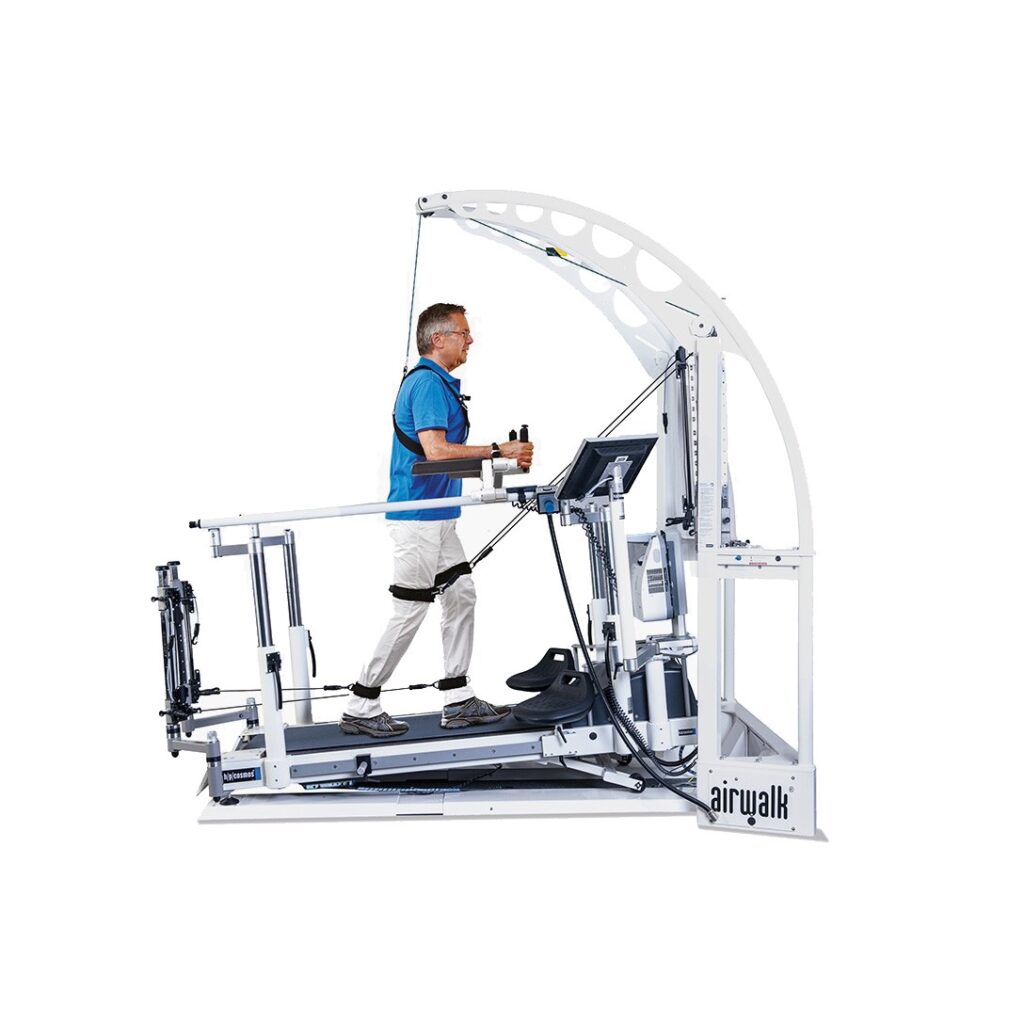
The h/p/cosmos airwalk ap is a body weight support device for treadmill therapy, training and supported functional exercise. A suspension vest supports the user while an adjustable pneumatic system provides dynamic unweighting.
The standard support range is approximately 0.5 to 80 kg, with an optional configuration extending this to approximately 120 kg. These figures describe the amount of weight relief, rather than the maximum user weight.
The airwalk ap has compatibility with pluto, mercury, locomotion, quasar and pulsar treadmills. Planning must also account for frame dimensions, ceiling height and a suitable compressed-air supply.
When assessments involve body weight support, record the amount used so that it forms part of the assessment conditions.
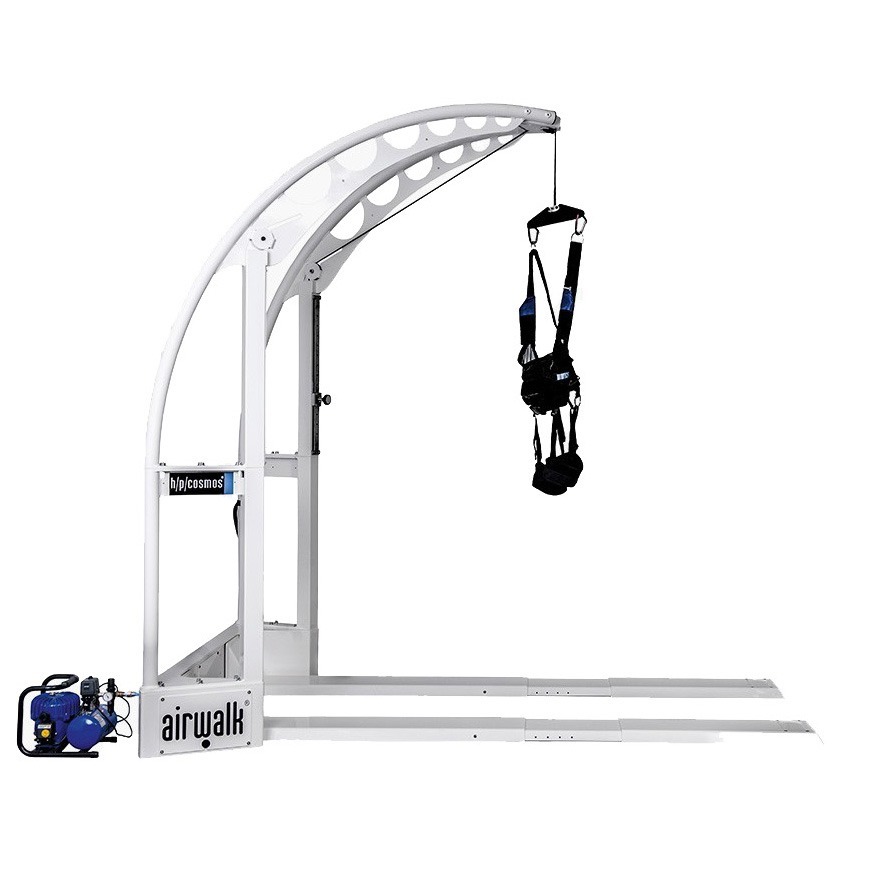
h/p/cosmos Airwalk AP Anti-Gravity Unweighting System
The h/p/cosmos Airwalk AP Anti-Gravity Unweighting System has been optimised for rehabilitation locomotion therapy.
This specially constructed un-weighting system supports a patient’s natural gait pattern allowing them to start exercising and rehabilitation as early as possible; it is controlled via remote control for the utmost ease of use by both the patient and therapist
For information about compatibility with non-h/p/cosmos treadmills, please contact us.
Build a setup that can develop with your service
You do not need to specify every measurement system at once. A sensible first stage is to identify the most useful additional measurement, confirm compatibility and plan how staff will collect and interpret the results.
Allow space for cameras, computers, therapist access and any support frame. Consider software licences, synchronisation, training and servicing alongside the hardware purchase.
Whether you are expanding an existing h/p/cosmos installation or planning a dedicated gait analysis and rehabilitation facility, HaB Direct can help you explore the available configurations.
Contact [email protected] or call +44 (0)1926 816 100 to discuss your treadmill, assessment requirements and possible upgrades.
Extend your treadmill setup with physiological testing
Alongside gait analysis, an h/p/cosmos treadmill ergometer can form the basis of exercise physiology testing. Respiratory gas measurement, wearable monitoring and blood lactate testing provide additional information about the body’s response to walking or running. The equipment selected will depend on the protocol, users and purpose of the assessment. Speak to our team today and explore your options.


