
Altitude training has long been used by athletes seeking to enhance endurance performance and prepare for competition in challenging environments. However, while the terms altitude testing and altitude training are often used interchangeably, they serve very different purposes.
Altitude training focuses on creating physiological adaptations through exposure to reduced oxygen environments, whereas altitude testing is used to assess how an individual responds to hypoxia and to guide training decisions. Understanding the distinction is essential for coaches, sports scientists, researchers, and clinicians looking to maximise the benefits of altitude-based interventions.
POWERbreathe Altitude & Environmental Systems (PBAES) offers a range of solutions to support both testing and training, from portable mask-based systems for individual athletes to large-scale environmental chambers capable of accommodating teams, researchers, and multiple pieces of equipment.

What Is Altitude Training?
Altitude training involves exposing an individual to an environment with reduced oxygen availability, known as hypoxia. This can occur naturally at high elevations or be simulated using specialised altitude systems.
The aim of altitude training is to encourage the body to adapt to lower oxygen levels. These adaptations may include improvements in oxygen transport, utilisation, and overall aerobic efficiency. As a result, altitude training has become a popular strategy among endurance athletes, cyclists, runners, triathletes, and professional sports teams.
Traditionally, athletes would travel to mountainous regions to train at altitude. While effective, this approach can be costly, time-consuming, and difficult to integrate into regular training schedules. Simulated altitude systems now allow facilities to recreate these conditions in a controlled indoor environment, making altitude training more accessible and repeatable.
What Is Altitude Testing?
While altitude training focuses on adaptation, altitude testing focuses on assessment.
Altitude testing allows practitioners to evaluate how an individual responds to reduced oxygen conditions before undertaking a training programme or travelling to compete at altitude. Responses to hypoxia can vary significantly between individuals, making testing an important step in developing personalised training strategies.
During altitude testing, practitioners may monitor factors such as:
- Oxygen saturation (SpO₂)
- Heart rate
- Ventilatory responses
- Exercise tolerance
- Perceived exertion
- Recovery characteristics
The information gathered can help identify athletes who may be more susceptible to altitude-related performance declines and can inform decisions regarding training intensity, acclimatisation strategies, and competition preparation.

Why Altitude Testing Matters
Not every athlete responds to altitude exposure in the same way. Some individuals adapt quickly, while others may experience significant reductions in performance or increased physiological stress.
Altitude testing provides valuable insight by helping practitioners:
- Establish baseline physiological responses
- Identify potential limitations before altitude exposure
- Monitor adaptations over time
- Optimise altitude training protocols
- Reduce guesswork when preparing athletes for competition
For sports science laboratories and research institutions, altitude testing also provides an opportunity to investigate the effects of hypoxia on human performance in a controlled and repeatable environment.
Combining Altitude Testing and Training
The greatest value often comes from combining altitude testing and altitude training as part of a structured performance programme.
Testing can be used to establish an athlete’s baseline response to hypoxia and identify appropriate training parameters. Follow-up assessments can then track progress and determine whether adaptations are occurring as expected.
This approach allows practitioners to move beyond generic altitude training protocols and develop more personalised interventions tailored to each individual’s physiological profile.
For sports science practitioners working with elite athletes, this data-driven approach can help maximise training efficiency while reducing unnecessary exposure to excessive physiological stress.
Why One Size Doesn’t Fit All
The altitude requirements of a university research laboratory are very different from those of a professional sports club or an individual athlete.
A sports scientist conducting a small-scale physiological assessment may only require a portable hypoxic generator and mask system. In contrast, a university research facility may need to accommodate multiple participants, exercise equipment, and monitoring systems within a larger controlled environment.
Similarly, professional sports teams may wish to expose multiple athletes to simulated altitude simultaneously, while military or occupational performance programmes may require larger environmental chambers capable of replicating a range of environmental conditions.
While understanding the difference between altitude testing and altitude training is important, the effectiveness of either approach depends on having the right equipment and environment. The needs of an individual athlete will differ significantly from those of a university research laboratory or professional sports organisation, making system selection a key consideration. The POWERbreathe Altitude range is designed to accommodate these differing requirements, providing scalable solutions that can grow alongside a facility’s ambitions.
Mask-Based Altitude Systems: Portable and Flexible
For many organisations, mask-based altitude systems provide an accessible entry point into altitude testing and training.
Portable systems such as the POWERbreathe Apex Pro and Apex High Performance Pro allow users to create controlled hypoxic conditions for individual athletes without requiring dedicated altitude rooms or extensive facility modifications.
The portability of mask-based systems makes them particularly attractive for sports science laboratories, performance clinics, universities, and elite athletes who require flexibility. They can also be integrated with treadmills, cycle ergometers, metabolic analysers, and physiological monitoring equipment to support comprehensive testing protocols.
For facilities looking to introduce altitude capabilities without significant infrastructure investment, mask-based systems provide a practical and cost-effective solution.
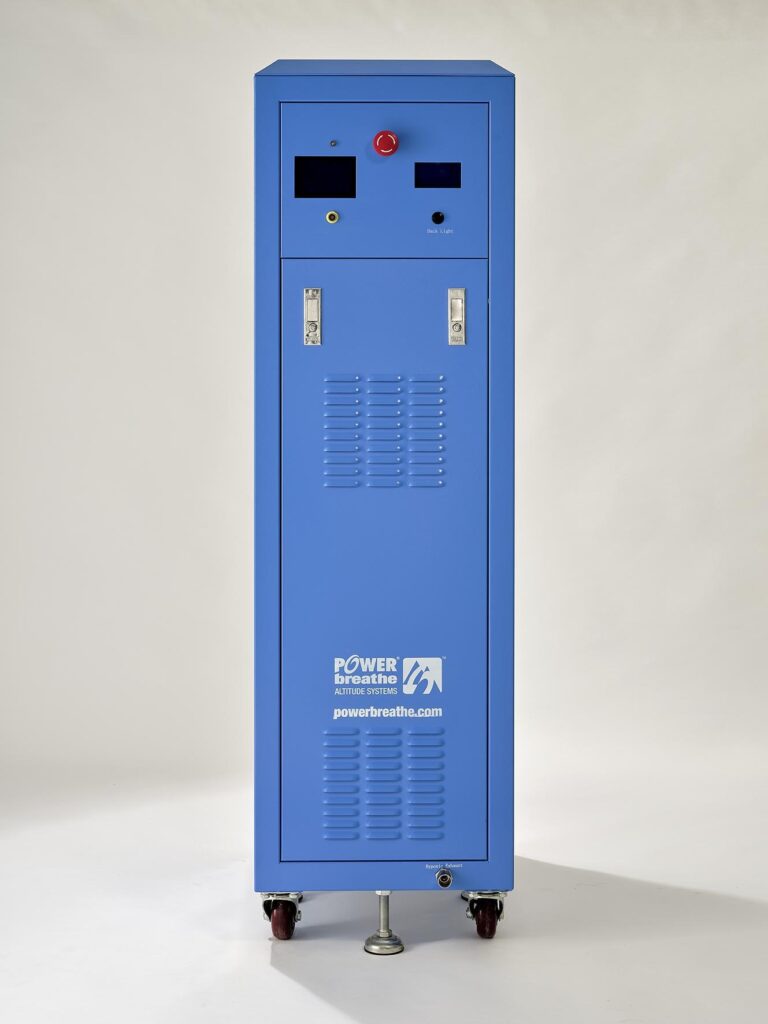
Apex High Performance Pro Mask Based Hypoxic Air Generator
The High Performance Pro Hypoxic Air Generator is an advanced mask based system and offers simulated altitude training via personal masks. It generates hypoxic air that is safe, reliable and fully adjustable up to an altitude of 5100m (11% Oxygen).
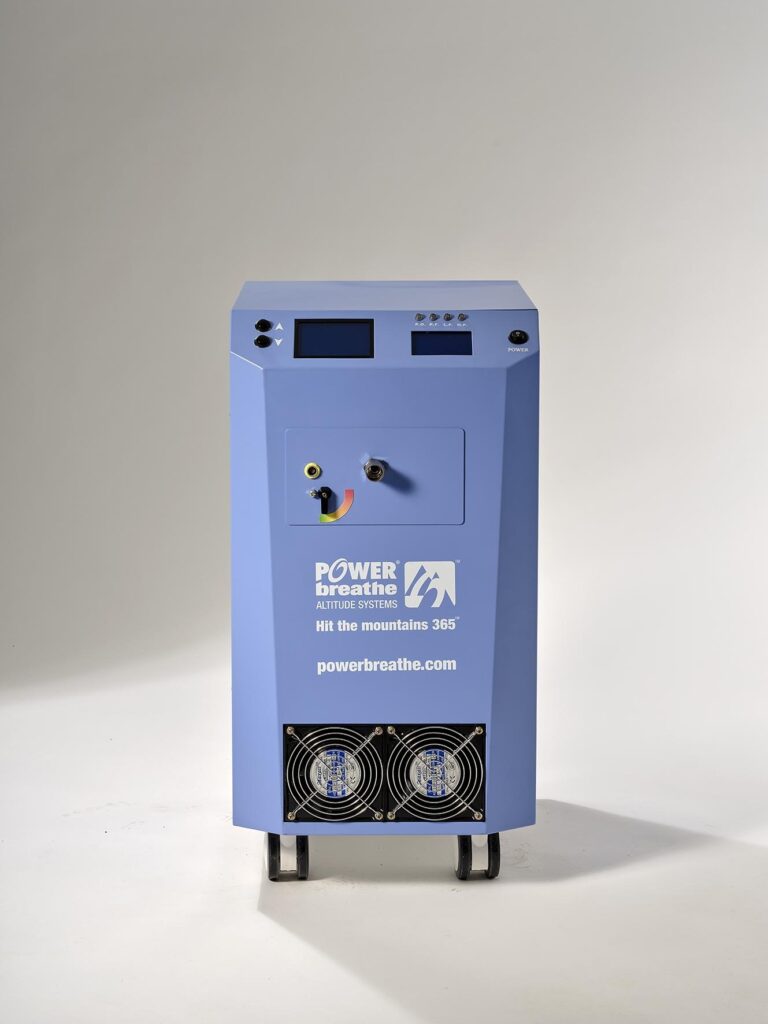
Apex Pro Mask Based Hypoxic Air Generator
The POWERbreathe Altitude & Environmental Systems (PBAES) Pro Mask Based Hypoxic Air Generator unit is easy to use and can simulate the hypoxic air levels typically found at an altitude level of between 2,300m and 4,500m, without the expense of international travel and time away from home.
Inflatable Altitude Modules for Sport-Specific Training
As altitude programmes expand, many facilities require larger training environments that can accommodate specific activities while avoiding the cost and commitment of permanent construction.
The POWERbreathe inflatable module range offers a flexible solution, with options including:
- Inflatable Cycle Modules
- Inflatable Running Modules
- Inflatable Multi-Training Modules
- Inflatable Swimming Modules
- Inflatable Sleep Modules
- Inflatable Lounge Modules
- Inflatable h/p/cosmos Treadmill Modules
Whether the goal is treadmill-based testing, cycling performance, swimming preparation, overnight acclimatisation, or multi-athlete training sessions, the inflatable module range provides a scalable solution that can be adapted to the specific needs of the facility. These systems create controlled hypoxic environments around the activity itself, allowing athletes to train, recover, or sleep in simulated altitude conditions.
One of the major advantages of inflatable modules is their flexibility. Facilities can install, relocate, expand, or reconfigure modules as requirements change.
Semi-Permanent Altitude Rooms
For organisations seeking greater capacity and environmental control, POWERbreathe Altitude Semi-Permanent Rooms provide a dedicated altitude environment without the construction requirements associated with permanent chambers.
These solutions allow multiple users to train simultaneously and can accommodate a wide range of exercise equipment and monitoring systems.
Semi-permanent rooms are often well suited to universities, elite sports programmes, and performance centres looking to establish a dedicated altitude facility.
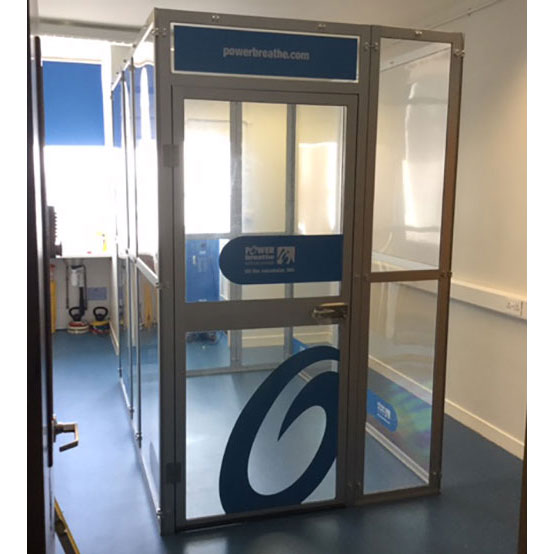
POWERbreathe Altitude Semi-Permanent Rooms
POWERbreathe Altitude & Environmental Systems (PBAES) Semi-Permanent Rooms have versatility at their core and can be easily assembled to meet training demands on any given day. Simply order the required number of panels (side, roof and door) to build your ideal sized training room. Each panel is connected with a toughened rubberised connection, creating a strong seal to limit leakage. Please ask for specifications.
Permanent Altitude Rooms and Environmental Facilities
At the highest end of the range are fully customised permanent altitude rooms.
These facilities can be designed around the specific needs of the organisation, whether supporting sports performance, military training, environmental physiology research, or clinical investigation.
Permanent rooms allow practitioners to create highly controlled environments capable of supporting multiple athletes, researchers, and testing systems simultaneously. They also provide a long-term solution for organisations where altitude and environmental training form a core part of their programme.
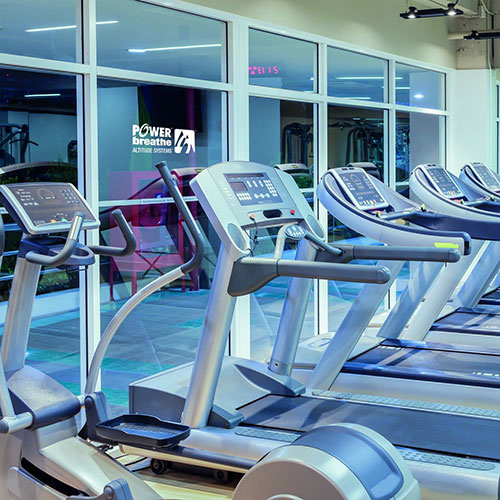
Permanent Rooms
The POWERbreathe Altitude & Environmental Systems (PBAES) Permanent Rooms have no fixed dimensions as they are created based upon your own room availability, whether your facility is large or small. They are ideal for commercial facilities, including Clubs, Rehabilitation Centres and Professional Sports Teams.
Which POWERbreathe Altitude System Is Right for Your Facility?
Selecting the right altitude solution depends on the intended application, available space, budget, and number of users.
Individual athletes and smaller facilities may benefit from the flexibility and portability of mask-based systems. Sports science laboratories and universities may find inflatable altitude modules offer the ideal balance between flexibility and environmental control. Larger research facilities, professional sports organisations, and military performance centres often benefit from dedicated altitude rooms or environmental chambers that can support multiple users simultaneously.
By offering solutions across this spectrum, POWERbreathe Altitude & Environmental Systems enables organisations to select a system that meets their current requirements while retaining the option to expand in the future.
Have questions about which altitude system is right for you? Contact us today using the contact form at the bottom of this page!
Conclusion
Altitude testing and altitude training may share the same environment, but they serve distinct purposes. Testing provides valuable insight into how an individual responds to hypoxia, while training aims to stimulate adaptations that may support performance and preparation for altitude exposure.
By supporting both assessment and intervention across a range of scalable solutions, POWERbreathe Altitude & Environmental Systems enables sports scientists, researchers, and performance practitioners to deliver controlled, repeatable altitude protocols that suit their specific requirements.
Whether the goal is understanding physiological responses, preparing athletes for competition at altitude, or conducting advanced research, combining altitude testing and altitude training can provide a more informed and effective approach to performance optimisation.
Contact Us
* indicates required fields


